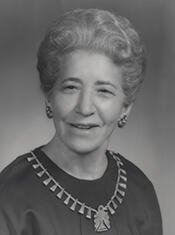
Catherine Dorris Norrell (March 30, 1901 – August 26, 1981) was an American educator, political aide, and Democratic politician who served as a Representative from Arkansas in the United States Congress from 1961 to 1963. The third woman in Arkansas history to gain a seat in the United States House of Representatives, she represented Arkansas’s 6th congressional district during the Eighty-seventh Congress and contributed to the legislative process during one term in office at a significant moment in American political and social history.
Norrell was born Catherine Dorris on March 30, 1901, in Camden, Ouachita County, Arkansas, to Franklin Dorris, a Baptist preacher, and Rose Whitehead Dorris. Her father’s ministry led the family to move frequently among congregations in Tennessee, Texas, and Arkansas, exposing her early to a range of communities and public life. The family eventually settled in Monticello, Arkansas, where she completed high school. This upbringing in a religious and service-oriented household helped shape her later interest in education, public service, and civic engagement.
After finishing high school, Dorris attended Ouachita Baptist University in Arkadelphia, Arkansas, and later studied at the University of Arkansas in Fayetteville. During her college years she developed notable musical skills, becoming a skilled organist and pianist. She subsequently served as director of the music department at Arkansas A & M College in Monticello (now the University of Arkansas at Monticello, historically associated with the Arkansas A&M system and sometimes linked in sources to what is now Arkansas State University) and taught in the Arkansas public school system. Her early professional life thus combined education, the arts, and community service, and she also worked as a church musician, roles she would continue to value throughout her life.
In 1922, Catherine Dorris married William Frank Norrell, an attorney and rising Democratic politician. The couple had one daughter, Julia Jean “Judy” Norrell. Beginning in the 1930s, when William F. Norrell was elected to the Arkansas Senate and later, in 1938, to the U.S. House of Representatives, Catherine Norrell became deeply involved in politics. She worked closely with her husband as his legislative assistant while he served in the state legislature and in Congress, gaining extensive familiarity with legislative procedures, constituent services, and the workings of the Democratic Party. In Washington, she was active in the social and support networks surrounding members of Congress and served as president of the Congressional Wives Club. In that role she befriended Hattie Wyatt Caraway of Jonesboro, Arkansas, the first woman ever elected to the U.S. Senate, an association that underscored Norrell’s own emerging identity as a woman in national politics.
Following the death of her husband in 1961, Catherine Norrell sought to succeed him in the U.S. House of Representatives. Drawing on three decades of experience working alongside him, she entered the special election for Arkansas’s 6th district with the campaign slogan, “Keep Your Congressional Power Up! Elect Mrs. W. F. Norrell…the Only Candidate Prepared to Step In.” Her daughter Judy, then on leave from George Washington University Law School, managed the campaign. In the special election held April 18, 1961, Norrell ran as a Democrat against four male Democratic candidates, including Pine Bluff lawyer and banker John Harris Jones (born 1922), who attacked her candidacy by alleging that, if elected, she would benefit financially from both the congressional salary and a pension derived from her husband’s House service. Norrell nonetheless prevailed, winning the election with 43 percent of the vote, compared with 25 percent for Jones and 23 percent for M. C. Lewis. She took the oath of office on April 25, 1961, becoming one of only 20 women serving in the Eighty-seventh Congress.
As a member of the House of Representatives from April 25, 1961, to January 3, 1963, Norrell participated fully in the democratic process and represented the interests of her Arkansas constituents during a period marked by the Kennedy administration, the Cold War, and the early stages of the modern civil rights and women’s rights movements. Her first vote in Congress supported the Kennedy administration’s Cold War policies, including proposed foreign aid to Latin American countries, reflecting the administration’s Alliance for Progress initiatives. She focused her legislative efforts on economic development for Arkansas and especially for the 6th District, seeking to protect and strengthen key regional industries such as clay, textiles, and lumber through increased government oversight and favorable policy. Observing that the wood industry in her district was suffering from reduced tariff rates and foreign competition, she joined Representative Cleveland M. Bailey of West Virginia in supporting a bill designed to ease Internal Revenue Service efforts to collect retroactive taxes. This measure was intended to shield domestic businesses from what she regarded as financial harassment and to respond to foreign countries that did not reciprocate U.S. trade concessions. Norrell also emerged as an advocate for women’s legal equality; in May 1961 she sponsored and signed a joint resolution calling for passage of the Equal Rights Amendment. Although both she and her husband were Democrats, she emphasized her independence in legislative judgment, remarking that she expected her voting record to be “more conservative than liberal.”
Norrell’s congressional career was cut short not by electoral defeat but by redistricting. The elimination of Arkansas’s 6th congressional district made her ineligible for renomination in her existing seat. The prospect of running against two powerful Democratic incumbents, Representatives Wilbur D. Mills and Oren Harris, combined with familial, political, and especially financial considerations, discouraged her from seeking another term. Her daughter Judy, who had managed her 1961 campaign, was concerned about the stress a contested race would impose on her mother and their family and urged her not to run. Privately, Catherine Norrell confided to friends that she could not afford the costs of a difficult campaign. As a result, her service in the House concluded on January 3, 1963, after one full term.
After leaving Congress, Norrell continued her public service at the national level. President John F. Kennedy appointed her Deputy Assistant Secretary of State for Educational and Cultural Affairs, a position she held from 1963 to 1965. In this role she participated in the State Department’s efforts to promote international educational exchanges and cultural diplomacy during the Cold War. On June 1, 1965, President Lyndon B. Johnson appointed her director of the United States Department of State Reception Center in Honolulu, Hawaii, a post she held until January 5, 1969. From this base in the fiftieth state, she oversaw official receptions and hospitality for visiting dignitaries and delegations. She noted with some irony that her husband had voted against Hawaii statehood while she had favored it, explaining, “…that was my husband and not me… I’m delighted to be here.”
In her later years, Norrell remained active in religious and community life. She worked as a church musician in Hawaii for much of her retirement, continuing the musical vocation that had marked her early career. Eventually she returned to Monticello, Arkansas, where she resided in her final years. Catherine Dorris Norrell died on August 26, 1981, in Warren, Bradley County, Arkansas. She was interred alongside her husband at Oakland Cemetery in Monticello, closing a life that spanned education, music, political partnership, and independent service in the United States Congress and the Department of State.
Congressional Record