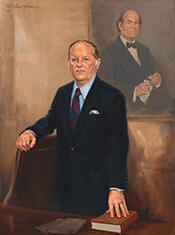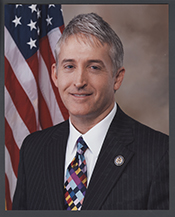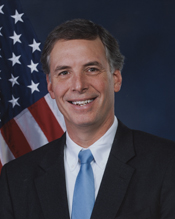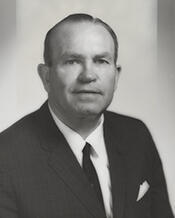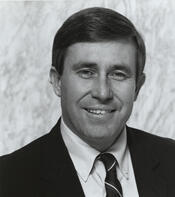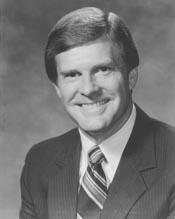
Carroll Ashmore Campbell Jr. (July 24, 1940 – December 7, 2005) was an American Republican politician who became a central figure in the rise of the modern Republican Party in South Carolina. Born in Greenville, South Carolina, he came of age in a period of political and social transition in the state. In 1959 he eloped with Iris Faye Rhodes; the couple later had two sons, Carroll Campbell III and Mike Campbell. The Campbell family would go on to own franchises for Wendy’s restaurants in South Carolina, reflecting the former governor’s ties to the state’s business community as well as its political life.
Campbell’s early public career unfolded against the backdrop of school desegregation and the realignment of Southern politics. In 1970, he took a leading role in opposing the racial integration of public schools in Greenville. He addressed a crowd of thousands in front of Parker High School to speak against integration, and on January 25 of that year he led a motorcade of some 800 vehicles to the state capitol in Columbia to protest what he termed “forced busing” of students to integrated schools. That same year he was elected to the South Carolina House of Representatives, where he served from 1970 to 1974 during the administration of Democratic Governor John C. West. In 1974, with Republican strategist Lee Atwater as a key adviser, Campbell ran unsuccessfully for lieutenant governor on a ticket aligned with Republican gubernatorial nominee James B. Edwards; while Edwards was elected governor, Campbell lost to Democrat Brantley Harvey. Despite this defeat, Campbell remained closely associated with Atwater and continued to seek his counsel throughout his political career.
Following his initial legislative service, Campbell remained active in state government and Republican politics. During the Edwards administration he served as executive assistant to the governor, gaining further experience in statewide executive operations. From 1976 to 1978 he represented the 2nd district in the South Carolina Senate, marking his second stint in the General Assembly. In 1978 he successfully ran for the United States House of Representatives from South Carolina’s 4th congressional district, based in and around Greenville. He defeated Max M. Heller, the Democratic mayor of Greenville and an immigrant from Austria, to fill the seat vacated by retiring Democrat James Mann. With this victory, Campbell became the first Republican to hold the 4th district seat since Reconstruction, underscoring the shifting partisan landscape in South Carolina.
Carroll Ashmore Campbell served as a Representative from South Carolina in the United States Congress from 1979 to 1987, completing four terms in the U.S. House of Representatives. A member of the Republican Party, he contributed to the legislative process during a significant period in American history, participating in the democratic process and representing the interests of his constituents in the 4th district. During his congressional tenure, Campbell also played important roles in national Republican politics. He served as state campaign chairman for Ronald Reagan’s presidential campaigns in 1980 and 1984, helping to consolidate Republican strength in South Carolina, and later served as southern regional chairman for George H. W. Bush’s presidential campaign in 1988. His congressional service ended when he left the House in 1987 to assume the governorship of South Carolina.
Campbell served as the 112th governor of South Carolina from January 1987 to January 1995, winning two terms in office. In the 1990 gubernatorial election he was reelected with 69 percent of the vote, defeating Democratic nominee Theo Mitchell, who received 27 percent. Earlier, in his first successful gubernatorial race, he had defeated Democrat Michael R. Daniel with 51 percent of the vote to Daniel’s 47 percent. As governor, Campbell became widely known for his leadership during crises and his efforts to attract major economic investment to the state. He coordinated South Carolina’s response to Hurricane Hugo in 1989, a devastating storm that required extensive emergency management and long-term recovery planning. He was also instrumental in persuading BMW to build its first United States manufacturing facility in Greer, South Carolina, a landmark economic development achievement that helped reshape the state’s industrial base. In recognition of his role in bringing BMW to South Carolina, the company announced in 2002 a $10 million donation for a facility at Clemson University’s International Center for Automotive Research, naming it the Carroll A. Campbell Jr. Graduate Engineering Center.
Campbell’s gubernatorial tenure was also marked by significant challenges to public confidence in state institutions. Allegations of financial mismanagement at the University of South Carolina led to the resignation of university president James B. Holderman. At the same time, Operation Lost Trust, a federal investigation into bribery and drug use involving members of the South Carolina General Assembly, resulted in the convictions of twenty-seven legislators, lobbyists, and others in a vote-buying scandal. Despite these controversies, Campbell maintained strong public support and, during 1993–1994, served as chairman of the National Governors Association, reflecting his national stature among state executives. Term limits prevented him from seeking a third consecutive term in 1994, and he left office with a reported job approval rating of 72 percent. Near the end of his governorship there was speculation that he might seek the Republican nomination for President of the United States in 1996, but on June 3, 1994, he announced that he would not run, citing the long odds and the extensive commitment such a campaign would require.
After leaving the governorship in 1995, Campbell moved into national policy and advocacy work. From 1995 to 2001 he served in Washington, D.C., as president and chief executive officer of the American Council of Life Insurers, becoming a prominent lobbyist for the insurance industry. Following his decision not to run for president, he was mentioned as a possible vice-presidential running mate for Republican nominee Bob Dole in 1996, and he used the speculation to encourage South Carolina legislators to support Dole’s candidacy. Ultimately, Dole selected former U.S. Representative and Housing and Urban Development Secretary Jack Kemp as his running mate. In 1998 Campbell and former South Carolina First Lady Lois Rhame West became co-chairs of Winthrop University’s first capital campaign, which raised more than $30 million. In 2001 he declined offers from President George W. Bush to serve as U.S. ambassador to Saudi Arabia or to Australia, indicating a lack of interest in those diplomatic posts.
In his later years, Campbell’s public life was curtailed by serious illness. In October 2001, at the age of 61, he was diagnosed with Alzheimer’s disease, a disclosure that forced him to abandon plans to run again for governor in 2002. His condition progressed, and in August 2005 he was admitted to a long-term residential treatment facility for Alzheimer’s patients. Carroll Ashmore Campbell Jr. died of a heart attack on December 7, 2005, at Lexington Medical Center in West Columbia, South Carolina. After his death, he lay in state at the South Carolina State House and was honored at memorial services at Trinity Episcopal Cathedral in Columbia and at All Saints Episcopal Church in Pawleys Island. He was buried in the cemetery of All Saints Episcopal Church. Upon his passing, David Wilkins, U.S. ambassador to Canada and former Speaker of the South Carolina House of Representatives, described Campbell as “the master architect” of the South Carolina Republican Party’s rapid rise to dominance. His sons later sought elected office themselves: Carroll Campbell III ran unsuccessfully for the 2010 Republican nomination for South Carolina’s 1st congressional district, and Mike Campbell was an unsuccessful candidate for lieutenant governor of South Carolina in 2006, underscoring the family’s continued engagement in the state’s political life.
Congressional Record