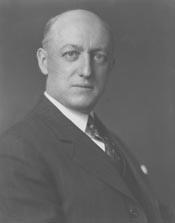
Carroll Lynwood Beedy (August 3, 1880 – August 30, 1947) was a Republican member of the United States House of Representatives from Maine who served seven consecutive terms in Congress from 1921 to 1935. His congressional career spanned a significant period in American history, encompassing the aftermath of World War I, the prosperity of the 1920s, and the early years of the Great Depression, during which he participated in the national legislative process and represented the interests of his Maine constituents.
Beedy was born in Phillips, Franklin County, Maine, on August 3, 1880. During his childhood his family moved within the state, and he was educated in the public schools of Lewiston in Androscoggin County. He pursued higher education at Bates College in Lewiston, an institution with strong ties to Maine’s political and civic life, and graduated in 1903. Seeking advanced legal training, he then attended the law department of Yale University, from which he graduated in 1906. His education at Bates and Yale provided him with a solid grounding in liberal arts and law that would shape his professional and political career.
After completing his legal studies, Beedy was admitted to the bar in 1907. He commenced the practice of law in Portland, Maine, the state’s largest city and commercial center. Establishing himself as a practicing attorney, he became involved in local legal affairs and public service. His professional reputation and engagement with civic matters led to his selection as prosecuting attorney of Cumberland County, a position he held from 1917 to 1921. In this role, he was responsible for the prosecution of criminal cases in one of Maine’s most populous counties during the World War I era and its immediate aftermath.
Beedy’s entry into national politics came in 1920, when he sought the Republican nomination for Congress. In a closely contested Republican primary, he defeated the Mayor of Portland, Charles Bailey Clarke, by a margin of 19 votes, a narrow victory that underscored the competitive nature of party politics in Maine at the time. Following this primary win, he was elected to the Sixty-seventh Congress and subsequently reelected to the six succeeding Congresses, serving from March 4, 1921, to January 3, 1935. As a member of the House of Representatives, he took part in debates and votes on major issues of the period, including postwar economic adjustments, Prohibition, and responses to the onset of the Great Depression.
During his tenure in Congress, Beedy held several committee leadership positions that reflected his standing within the Republican Conference and the institutional structure of the House. He served as chairman of the Committee on Mileage in the Sixty-eighth and Sixty-ninth Congresses, overseeing matters related to the travel allowances of Members of Congress. He also chaired the Committee on Expenditures in the Department of Labor in the Sixty-ninth Congress, where he was involved in oversight of federal spending and administration in that department. In addition, he was chairman of the Committee on Elections No. 1 in the Seventieth and Seventy-first Congresses, a committee charged with adjudicating contested elections to the House, thereby placing him at the center of disputes over electoral outcomes and the integrity of congressional membership.
Beedy’s congressional service came to an end following the elections of 1934. Running for reelection to what would have been the Seventy-fourth Congress, he was an unsuccessful candidate amid a broader national shift toward Democratic control during the New Deal era. Leaving elective office in January 1935, he did not return to Maine to resume local practice but instead continued his legal career in the nation’s capital. He practiced law in Washington, D.C., drawing on his extensive legislative experience and familiarity with federal institutions during the remaining years of his life.
Outside his formal public roles, Beedy was known to be an active Freemason, participating in the fraternal and civic activities associated with that organization. He remained in Washington, D.C., until his death there on August 30, 1947. Following his death, his body was returned to Maine, and he was interred in Evergreen Cemetery in Portland, a resting place for many of the city’s notable figures. His life and career reflected the trajectory of a Maine lawyer who rose from local practice and county office to sustained service in the United States Congress during a transformative era in American political and economic history.
Congressional Record