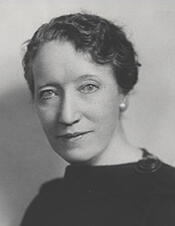
Caroline Love Goodwin O’Day (June 22, 1869 – January 4, 1943) was an American politician, social welfare advocate, and four-term Representative from New York in the United States Congress from 1935 to 1943. A member of the Democratic Party, she represented New York at-large and was the third woman elected to Congress from New York and the first Democratic woman to represent the state in the House of Representatives. During a significant period in American history marked by the Great Depression and the New Deal, she contributed actively to the legislative process and became known for her leadership in social welfare policy and civil rights.
O’Day was born Caroline Love Goodwin on June 22, 1869, in Perry, Georgia, to Sidney Prior Goodwin and Mary Elia Warren Goodwin. Her father, a member of the Southern planter class, owned property in Savannah, Georgia, and served as a lieutenant in the Oglethorpe Light Infantry of the Confederate States Army during the American Civil War, surrendering with his unit and being paroled in April 1865 following the Confederate defeat. The Goodwin family traced its American lineage to Ozias Goodwin, who emigrated from England to the Massachusetts Bay Colony in 1639. Caroline, the eldest of several children and known to her family as “Carrie,” grew up in a postwar South shaped by Reconstruction and social change, experiences that would later inform her interest in social justice and public welfare.
O’Day received her early education at the Lucy Cobb Institute in Athens, Georgia, a prominent finishing school for young women that combined academic instruction with training in social graces and the arts. After graduating, she pursued further artistic studies in Europe, spending extended periods in Paris, Munich, and Holland. There she developed skills in painting and the visual arts and cultivated an appreciation for European culture that later influenced her support for cultural and educational initiatives. Her exposure to European social thought and reform movements contributed to the progressive outlook she would bring to her later work in public life.
On April 20, 1901, Caroline Goodwin married Daniel O’Day, a leading businessman who served as secretary and treasurer of the Standard Oil Company and was one of the key executives in John D. Rockefeller’s oil enterprise. The couple settled in Rye, New York, where they raised four children. Daniel O’Day’s considerable business success and wealth provided Caroline with financial independence and access to New York’s social and political elite, enabling her to devote substantial time and energy to civic, educational, and political causes without concern for personal economic security. Her home in Rye became a base for her growing engagement in public affairs.
O’Day’s entry into public life began at the local level in Rye, where she focused on educational reform. She served as president of the Rye School Board, advocating for improved school facilities, expanded curricula, and broader educational opportunities for children. Her work on the school board reflected her conviction that quality public education was essential to democratic society and social progress. Her effectiveness in local educational leadership helped establish her reputation as a capable administrator and reformer and laid the groundwork for her later roles in state and national public service.
O’Day’s formal involvement with the Democratic Party began during the Progressive Era and extended over several decades. She served as vice chairwoman of the New York State Democratic Committee from 1916 to 1920, a period in which the party was rebuilding its organization and appeal after electoral setbacks. From 1923 to 1942 she held the influential post of associate chairwoman of the state committee, making her one of the most prominent women in New York Democratic politics. In these positions she helped recruit candidates, organize campaigns, and shape party positions on key issues, with particular attention to mobilizing newly enfranchised women voters after the ratification of the Nineteenth Amendment in 1920. She also served as a delegate to four consecutive Democratic National Conventions—1924, 1928, 1932, and 1936—where she supported progressive policies and played a role in the nomination of Franklin D. Roosevelt for the presidency in 1932.
Parallel to her party leadership, O’Day gained extensive experience in social policy through state service. From 1923 to 1934 she was a commissioner on the New York State Board of Social Welfare. In that capacity she helped develop and oversee policies related to child welfare, mental health services, and assistance for economically disadvantaged families during a period of rapid urbanization, immigration, and, later, the onset of the Great Depression. She advocated evidence-based approaches to social welfare and supported the expansion of state services to meet growing needs. This work provided her with deep practical knowledge of social welfare administration and the challenges faced by vulnerable populations, expertise that she would later bring to her legislative efforts in Congress.
O’Day was elected to the United States House of Representatives in 1934 as an at-large Representative from New York, a system the state used following reapportionment after the 1930 census. She took her seat on January 3, 1935, in the 74th Congress and was reelected in 1936, 1938, and 1940, serving continuously through the 75th, 76th, and 77th Congresses until January 3, 1943. Her elections made her a trailblazer for women in New York politics: she was the third woman ever elected to Congress from New York and the first Democratic woman to represent the state in the House. During her four terms in office, she represented the interests of her constituents while participating actively in the broader national debates of the New Deal era.
In Congress, O’Day played a significant role in shaping New Deal social welfare legislation and emerged as a prominent advocate for civil rights. She served on several committees and attained a key leadership position as chairwoman of the House Committee on Election of President, Vice President, and Representatives during the 75th through 77th Congresses. In this role she oversaw matters related to federal electoral procedures and voting rights, including issues involving the Electoral College, voter registration, and the mechanics of federal elections. Her chairmanship placed her at the center of discussions about democratic processes and electoral reform at a time when questions of access to the ballot and the integrity of elections were gaining national attention.
O’Day’s most notable legislative achievement was her co-sponsorship of the Wagner-O’Day Act of 1938, which she introduced in partnership with Senator Robert F. Wagner of New York. This landmark measure required federal agencies to purchase certain goods and services from qualified nonprofit agencies employing people who were blind or had other disabilities, thereby creating stable employment opportunities for individuals who had often been excluded from the labor market. The act marked a significant shift in disability policy from a purely charitable model to one emphasizing productive employment and economic integration. The program established under the Wagner-O’Day Act was later expanded and renamed the Javits-Wagner-O’Day Act and continues in operation today as the AbilityOne Program.
As a steadfast supporter of President Roosevelt’s New Deal, O’Day voted for most major New Deal initiatives, including the Social Security Act, the Fair Labor Standards Act, and a range of relief and recovery measures designed to combat unemployment and poverty during the Great Depression. Drawing on her experience with the New York State Board of Social Welfare, she argued that the federal government bore a responsibility to address economic inequality and to provide a social safety net for vulnerable citizens. On the House floor and in committee work, she consistently backed legislation aimed at strengthening social welfare programs, improving labor standards, and expanding protections for working families.
O’Day also became known for her strong commitment to civil rights. In 1939 she publicly criticized the Daughters of the American Revolution (DAR) for refusing to allow Marian Anderson, the distinguished African American contralto, to perform at DAR Constitution Hall in Washington, D.C. Her criticism paralleled that of First Lady Eleanor Roosevelt, who resigned from the DAR in protest. The controversy culminated in Anderson’s historic Easter Sunday concert at the Lincoln Memorial before an integrated audience of approximately 75,000 people. O’Day’s stance in this episode underscored her dedication to racial equality and her willingness to take principled positions on contentious civil rights issues, even when such positions risked political backlash.
In addition, O’Day supported federal anti-lynching legislation, including the Costigan-Wagner Bill, which sought to make lynching a federal crime. Although the bill ultimately failed due to filibusters in the Senate, her advocacy aligned her with civil rights organizations such as the NAACP and with progressive Northern Democrats who pressed for federal intervention against racial violence. Her support for anti-lynching measures placed her at odds with many Southern Democrats but reflected her broader belief that the federal government had a duty to protect the civil rights and personal safety of all citizens, regardless of race.
Caroline Love Goodwin O’Day’s congressional service ended with the close of the 77th Congress on January 3, 1943. She died the following day, on January 4, 1943, while still in office, bringing to a close a public career that had spanned local school governance, state social welfare administration, party leadership, and national legislative service. Her work in Congress during four terms in office, her leadership on electoral and social welfare issues, and her advocacy for civil rights and the disabled left a lasting imprint on federal policy and on the evolving role of women in American political life.
Congressional Record