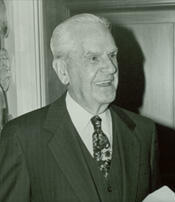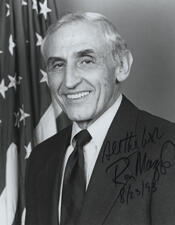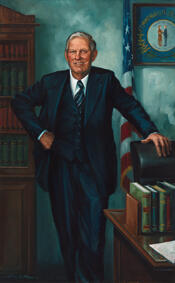
Carl Dewey Perkins (October 15, 1912 – August 3, 1984) was an American politician and long-serving Democratic member of the United States House of Representatives from the Commonwealth of Kentucky, representing his state in Congress from January 3, 1949, until his death in 1984. Over the course of 18 consecutive terms, he became a central figure in federal education and antipoverty policy and was widely regarded as one of the most influential New Deal–oriented liberals from Kentucky.
Perkins was born in Hindman, Knott County, Kentucky, on October 15, 1912, to Dora Calhoun Perkins and James Perkins. He attended Hindman High School and then Caney Junior College, an institution in Knott County that later became Alice Lloyd College. Before entering the legal profession, he worked as a teacher in a Knott County school, where he was responsible for a class of 90 students, an experience that helped shape his lifelong interest in education and opportunities for rural youth.
Pursuing a legal career, Perkins enrolled at the Jefferson School of Law in Louisville, Kentucky, now known as the University of Louisville School of Law. He graduated in 1935, passed the bar examination, and began practicing law. Early in his legal career, he served a term as commonwealth’s attorney for the Thirty-first Judicial District of Kentucky, gaining experience in public prosecution and local governance. In 1938 he married Verna Johnson; the couple had one son, Carl C. Perkins, who would later succeed him in Congress.
Perkins entered elective office in the 1940s. In 1940 he was elected to the Kentucky General Assembly, marking his formal entry into state-level politics. He was elected Knott County Attorney in 1941 and was reelected to that post in 1945, serving as the chief legal officer for the county. He resigned as county attorney on January 1, 1948, to become counsel to the Kentucky Department of Highways in Frankfort, broadening his experience in state administration and infrastructure policy. During World War II, Perkins enlisted in the United States Army and served a tour in Europe, adding military service to his record of public commitment.
With the support of Governor Earle C. Clements, Perkins sought national office in 1948. He won the Democratic primary to challenge Wendell H. Meade, the one-term Republican congressman from Kentucky’s 7th Congressional District, who had been elected in the wake of war-profiteering charges against Democratic incumbent Andrew J. May. Perkins defeated Meade in the general election and took his seat in the Eighty-first Congress on January 3, 1949. He was subsequently reelected to 17 succeeding Congresses, serving continuously in the House of Representatives from 1949 until his death in 1984. Throughout this period, he represented the interests of his largely rural and economically distressed constituents while participating actively in the broader legislative process during a transformative era in American history.
Perkins’s most enduring influence came through his work on education and labor policy. From 1967 until his death in 1984, spanning the Ninetieth through the Ninety-eighth Congresses, he served as chairman of the House Committee on Education and Labor. In that capacity, he played a key role in shaping major Great Society and War on Poverty initiatives. His work on the committee helped produce the Economic Opportunity Act of 1964 and the Head Start program, aimed at breaking the cycle of poverty through early childhood education and community action. The local Head Start center in his hometown of Hindman, Kentucky, is named in his honor, reflecting the close connection between his national legislative work and his home community. United Press International described him as “one of the most effective field generals in Lyndon Johnson’s war on poverty.”
Politically, Perkins stood out among Southern Democrats as a pro-labor New Deal liberal. He consistently aligned himself with organized labor and federal social programs and diverged from many of his regional colleagues on civil rights. He did not sign the 1956 Southern Manifesto, a document opposing the Supreme Court’s decision in Brown v. Board of Education. In Congress he voted in favor of the Civil Rights Acts of 1957, 1960, 1964, and 1968, as well as the Twenty-fourth Amendment to the United States Constitution, which abolished the poll tax in federal elections, and the Voting Rights Act of 1965. Notably, on the Civil Rights Act of 1964 he was the only member of the Kentucky delegation to cast a “yes” vote, underscoring his willingness to break with prevailing opinion in his region in support of civil rights legislation.
On August 3, 1984, while traveling from Washington, D.C., to Lexington, Kentucky, Perkins fell ill during a flight. Upon landing in Lexington, he was taken to a local hospital, where he died of a heart attack at the age of 71. His death brought to a close more than three and a half decades of continuous congressional service. Kentucky Governor Martha Layne Collins ordered flags at state facilities to be flown at half-staff until his funeral in recognition of his long tenure and impact on the Commonwealth. His funeral, held in the Knott County High School gymnasium, was widely attended and filled to capacity with constituents, colleagues, and friends. Many members of Congress flew to Kentucky to pay their respects, including Senator Edward Kennedy, House Majority Leader Jim Wright, Congressman William H. Natcher, and Speaker of the House Thomas P. O’Neill, who delivered the eulogy. Perkins was succeeded in the House of Representatives by his son, Carl C. Perkins, continuing the family’s representation of the district.
Perkins’s legacy is reflected in numerous federal programs, laws, and public facilities that bear his name, particularly in the field of education and services for the underprivileged. The federal Perkins Loan program for low-income college students was named in his honor, as was the Carl D. Perkins Career and Technical Education Improvement Act of 2006, which provides federal funding for vocational and technical education. In Kentucky, the Carl D. Perkins Bridge over the Ohio River, the Carl D. Perkins Building on the campus of Eastern Kentucky University, and the Carl D. Perkins Federal Building and United States Courthouse in Ashland commemorate his contributions. Additional institutions bearing his name include the vocational school at Knott County Central High School in Hindman, the Carl D. Perkins Job Corps Center in Prestonsburg, and the Carl D. Perkins Rehabilitation Center in Thelma. Kentucky Highway 80 in Hazard is designated the Carl D. Perkins Parkway; it runs from Hazard through his home county of Knott County and connects with the Hal Rogers Parkway in Hazard, symbolically linking key parts of eastern Kentucky that he long represented.
Perkins was originally buried in a private cemetery near his home in Hindman. In 2007 his remains were moved to Mountain Memory Gardens, a public cemetery in Hindman, where his grave site is now located. His widow, Verna J. Perkins, later sold the family home and property and retired to the Lafayette Living Center in Lexington. She died in 2012, closing a chapter in the family history of one of Kentucky’s most prominent twentieth-century legislators.
Congressional Record