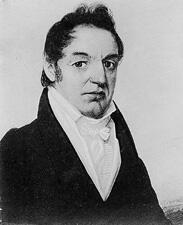
Calvin Willey (September 15, 1776 – August 23, 1858) was an American politician and lawyer from Connecticut who served in the United States Senate from 1825 to 1831. A member of the Adams Party during his tenure in Congress, he participated actively in the legislative process during a significant period in American political history and represented the interests of his Connecticut constituents in the federal government.
Willey was born on September 15, 1776, in East Haddam, Connecticut. He attended the common schools of his native state, receiving a basic formal education typical of the late eighteenth century. In 1795 he began the study of law in Hebron, Connecticut, pursuing the legal training that would underpin his subsequent public career. After several years of study, he was admitted to the bar in February 1798, marking the start of his professional life as an attorney.
Following his admission to the bar, Willey established a legal practice in Chatham, Connecticut. In 1800 he moved to Stafford, where he continued to practice law and became increasingly involved in local affairs. He was appointed the first postmaster at Stafford Springs, serving in that capacity from 1806 to 1808. In 1808 he relocated to Tolland, Connecticut, which would remain closely associated with his later life. He continued his public service as postmaster of Tolland from 1812 to 1816, combining his legal work with federal administrative responsibilities.
Willey’s political career began at the state level. He was elected to the Connecticut House of Representatives from Stafford and served from 1805 to 1806. After moving to Tolland, he returned to the Connecticut House as a representative for that town in 1810, 1812, and again in 1820–1821, participating in state legislative deliberations over a span of many years. In addition to his legislative duties, he served as judge of probate for the Stafford district from 1818 to 1825, overseeing matters of estates and guardianships. His growing prominence in state affairs led to his election to the Connecticut State Senate, where he served in 1823–1824. In 1824 he was chosen as a presidential elector in the United States presidential election, reflecting his stature within Connecticut’s political leadership.
Willey was elected to the United States Senate for the term beginning March 4, 1825, as a member of the Adams Party, aligned with the supporters of President John Quincy Adams. Although his term officially commenced in March, he did not assume his seat until May 4, 1825. He served one full term in the Senate, from 1825 to March 3, 1831. During his time in the upper chamber, he contributed to the legislative process at the national level and took part in debates and votes during a formative era in the nation’s political development. He also held a leadership role as chairman of the United States Senate Committee on Agriculture, Nutrition, and Forestry in the Nineteenth Congress, where he was involved in matters affecting the country’s agricultural interests.
After leaving the Senate at the conclusion of his term in 1831, Willey did not hold further public office but continued to practice law in Connecticut. He remained engaged in politics to some extent and ran for governor of Connecticut as a Democrat in 1832, though he was unsuccessful in that bid. His post-congressional years were devoted primarily to his legal practice and to life in his adopted communities of Tolland and Stafford.
Calvin Willey died in Stafford, Connecticut, on August 23, 1858. He was interred in Skungamaug Cemetery in Tolland, Connecticut. His career encompassed service at multiple levels of government—local, state, and federal—and spanned a period of substantial political change in the early United States.
Congressional Record