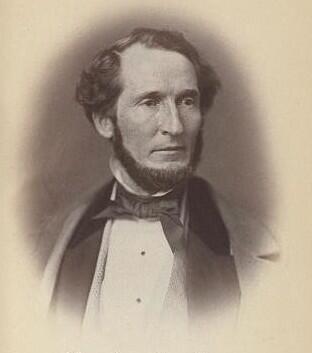
Calvin Clifford Chaffee (August 28, 1811 – August 8, 1896) was an American medical doctor and politician who became known in mid-nineteenth-century public life as an outspoken opponent of slavery. A member of the Republican Party representing Massachusetts, he served two terms in the United States House of Representatives during a period of mounting sectional conflict that preceded the Civil War. His career combined medical practice with antislavery advocacy and legislative service, and he participated actively in the democratic process while representing the interests of his constituents.
Chaffee was born on August 28, 1811, in the early decades of the American republic, a time when the nation was expanding westward and political debates over slavery and economic development were intensifying. Little is recorded in standard references about his parents or early family life, but his subsequent professional and political activities suggest that he was raised in an environment that valued education, public service, and civic engagement. Growing up in this context, he came of age as the Second Party System was taking shape, with the rise of the Whig and Democratic parties and the early stirrings of organized antislavery sentiment in the North.
Chaffee pursued formal education with the goal of entering the medical profession, undertaking the study of medicine at a time when American medical training was evolving from informal apprenticeships toward more structured instruction. He completed his medical studies and qualified as a physician, joining a profession that was increasingly important in rapidly growing urban and industrial communities. As a medical doctor, he would have been engaged in general practice, treating a wide range of illnesses and injuries in an era before modern antibiotics and advanced surgical techniques, and his work placed him in close contact with the daily lives and hardships of ordinary Americans.
Establishing himself as a practicing physician, Chaffee built a reputation in his community that helped lay the groundwork for his later political career. His medical practice not only provided him with professional standing but also exposed him to the social and economic inequalities of the period, including the moral and political questions surrounding slavery. Over time, he became an outspoken opponent of slavery, aligning himself with the growing antislavery movement in the North. His views reflected the broader shift among many Northern professionals and reformers who came to see slavery as incompatible with the nation’s republican ideals and emerging free-labor economy.
Chaffee’s transition from medicine to politics occurred as the national debate over slavery intensified in the 1850s. He affiliated with the newly formed Republican Party, which coalesced in opposition to the expansion of slavery into the western territories. As a member of the Republican Party representing Massachusetts, he was elected to the United States House of Representatives, where he served two terms in office. His service in Congress took place during a significant period in American history, marked by the aftermath of the Compromise of 1850, the controversy over the Kansas-Nebraska Act, and rising sectional tensions that would soon lead to secession and civil war. In this environment, Chaffee contributed to the legislative process, participating in debates and votes that shaped the nation’s response to the slavery question.
During his congressional service, Chaffee represented the interests of his Massachusetts constituents, who were deeply engaged in issues of slavery, economic development, and national unity. As an antislavery Republican, he supported measures that limited the spread of slavery and defended the rights of free states, reflecting the views of many in his district who favored a free-soil policy and opposed the enforcement of pro-slavery measures such as the Fugitive Slave Act. His role in Congress placed him among the cohort of Northern legislators who sought to use federal power to contain slavery and promote a vision of the United States grounded in free labor and constitutional liberty.
After completing his two terms in the House of Representatives, Chaffee returned to private life. He resumed his professional and civic activities outside of Congress, remaining identified with the principles that had guided his public career, particularly his opposition to slavery and his commitment to the Union. Living through the Civil War and Reconstruction, he witnessed the abolition of slavery and the constitutional transformations that followed, developments that aligned with the antislavery convictions he had expressed during his years in office.
Calvin Clifford Chaffee died on August 8, 1896, closing a life that spanned from the early national period through the end of the nineteenth century. Remembered as both a medical doctor and a politician, he exemplified the mid-nineteenth-century professional who moved from local practice into national politics, using his position to engage with the central moral and political issue of his time. His congressional service as a Republican from Massachusetts, his two terms in office, and his reputation as an outspoken opponent of slavery secured his place in the historical record of the United States Congress.
Congressional Record