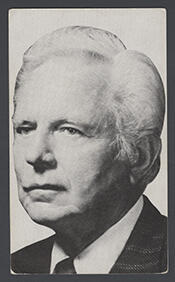
Calvary Morris (January 15, 1798 – October 13, 1871) was an American politician and three-term member of the United States House of Representatives from Ohio, serving from 1837 to 1843. A member of the Whig Party, he represented his Ohio constituents during a formative period in the nation’s political development, participating actively in the legislative process and the broader democratic life of the early nineteenth century.
Morris was born on January 15, 1798, in Charleston, South Carolina. In his youth he moved with his family to the Northwest Territory, settling in what would become the state of Ohio. He grew up amid the frontier conditions of the early Ohio settlements, an experience that shaped his understanding of land issues, local governance, and the needs of a developing region. Although detailed records of his formal schooling are limited, he received a practical education suited to the era, combining basic academic instruction with the responsibilities of life in a growing community.
As a young man, Morris established himself in southeastern Ohio, where he engaged in business and local public affairs. He became involved in agriculture and land-related enterprises, reflecting the central role of land development in the region’s economy. His growing prominence in local matters led naturally to positions of public trust, and he began to build a reputation as a capable and reliable figure in county and state affairs. Through these roles he gained familiarity with legal, economic, and infrastructural questions that would later inform his work as a legislator.
Morris’s political career advanced as he entered elective office in Ohio. He served in the Ohio General Assembly, where he participated in shaping state policy during a period of expansion and institutional development. His work in state government helped establish his standing within the Whig Party, which favored legislative support for economic development, internal improvements, and a balanced approach to federal power. By the mid-1830s he had become a recognized Whig leader in his region, positioned to seek national office.
In 1837 Morris was elected as a Whig to the United States House of Representatives from Ohio, beginning the first of three consecutive terms in Congress. He served in the Twenty-fifth, Twenty-sixth, and Twenty-seventh Congresses, from March 4, 1837, to March 3, 1843. During these years he represented the interests of his Ohio constituents at a time marked by the aftermath of the Panic of 1837, debates over banking and currency, and continuing questions about federal support for internal improvements. As a member of the Whig Party representing Ohio, Calvary Morris contributed to the legislative process during his three terms in office, participating in committee work, floor debates, and votes on measures affecting both his state and the nation.
Morris’s congressional service occurred during a significant period in American history, as the country grappled with economic instability, sectional tensions, and the evolving role of the federal government. Within this context, he aligned with Whig principles that emphasized congressional authority, economic modernization, and cautious expansion. He took part in the democratic process by advocating for policies intended to support commerce, transportation, and the orderly development of the western states, reflecting the priorities of his Ohio district.
After leaving Congress in 1843, Morris returned to private life in Ohio, remaining engaged in local and regional affairs. He continued to be associated with the civic and economic development of his community, drawing on the experience and relationships he had built over years of public service. His later years were spent in Athens County and the surrounding area, where he was remembered as one of the figures who had helped guide the region through its early growth and integration into the broader political and economic life of the United States.
Calvary Morris died on October 13, 1871. His life spanned the transformation of Ohio from a frontier region to a firmly established state, and his career reflected the opportunities and challenges of that era. Through his roles in state government and his three terms in the U.S. House of Representatives, he contributed to the representation of Ohio’s interests in the national legislature and participated in the shaping of American public policy during a critical period of the republic’s development.
Congressional Record