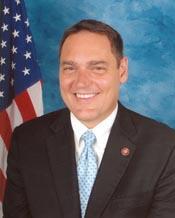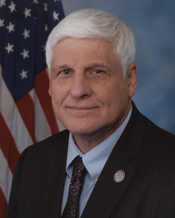
Robert Brian Gibbs (born June 14, 1954) is an American politician and agricultural businessman who served as a Representative from Ohio in the United States Congress from 2011 to 2023. A member of the Republican Party, he represented Ohio’s 7th congressional district for six terms and contributed to the legislative process during a significant period in American history, participating in the democratic process and representing the interests of his constituents.
Gibbs was born on June 14, 1954, in Peru, Indiana. In the 1960s, his family moved to the Cleveland, Ohio, area, where he attended local schools and graduated from Bay High School in Bay Village. In 1974, he completed his postsecondary education at the Ohio State University Agricultural Technical Institute. Following his graduation, Gibbs moved to Lakeville, Ohio, where he co-founded Hidden Hollow Farms, Ltd. Originally a swine production operation, Hidden Hollow Farms later transitioned to producing corn and soybeans, reflecting broader shifts in Ohio’s agricultural economy.
Gibbs built his early career in agriculture and agricultural advocacy. He became deeply involved with the Ohio Farm Bureau Federation, Ohio’s largest agricultural organization, joining its board of trustees in 1985 and eventually serving as its president. In addition to his leadership role in the Farm Bureau, he served as a board member of the Farm Bureau Bank, the Ohio Livestock Coalition, the Ohio Cooperative Council, and the Ohio Farm Bureau Alliance. He was president of the Loudonville Farmers Equity Company in Loudonville, Ohio, where he served on the board for 12 years. Gibbs also held local leadership positions as president of the Holmes County extension advisory committee and the Holmes County Farm Bureau, and he served as a supervisor for the Holmes County Soil & Water Conservation Service, underscoring his long-standing engagement with agricultural policy, cooperative enterprises, and conservation issues.
Gibbs entered elective office in the Ohio General Assembly in 2002, when he was elected to the Ohio House of Representatives from a newly drawn district, defeating Democrat Tom Mason of Ashland. He was reelected in 2004 in a rematch against Mason, and again in 2006, when he defeated Democratic nominee James P. Riley, a former township trustee from Sullivan, Ohio, with 60 percent of the vote. During his tenure in the Ohio House, Gibbs was appointed in 2006 to a special task force to study eminent domain and its use and application in Ohio; the committee spent most of that year examining the issue and issued its final report in August 2006 with recommendations to the General Assembly. In his last term in the Ohio House, Gibbs served as chairman of the House Ways and Means Committee and was also a member of the Agriculture & Natural Resources Committee, the Financial Institutions, Real Estate and Securities Committee, the Health Care Access and Affordability Committee, and the Insurance Committee, giving him broad experience in fiscal, regulatory, and agricultural matters.
On August 16, 2007, Gibbs announced his candidacy for the Ohio Senate from the 22nd district, seeking the seat being vacated by term-limited Senator Ron Amstutz. He initially anticipated a primary challenge from State Representative Jim Carmichael, but Carmichael withdrew from the race on October 21, 2007, to run for Wayne County commissioner. In the 2008 general election, Gibbs won the Senate seat, defeating Democratic nominee James E. Riley, a job/security representative for the U.A.W. international union, with 59 percent of the vote. He began his first term in the Ohio Senate in 2009. After winning election to Congress in 2010, Gibbs resigned from the Ohio Senate after serving approximately half of one term, transitioning from state to federal legislative service.
Gibbs was elected to the U.S. House of Representatives in the 2010 election cycle. He sought a seat in Ohio’s then-configured 18th congressional district and faced Democratic incumbent Zack Space and Constitution Party nominee Lindsey Sutton in the general election. He emerged from an eight-way Republican primary field, and following close results and a recount, he was certified the primary winner on June 4, 2010, about a month after the primary. In the November 2, 2010, general election, Gibbs defeated Space by nearly 14 percentage points, winning 14 of the 16 counties in the district. Following redistricting after the 2010 census, he ran in the newly drawn Ohio’s 7th congressional district and won the November general election, defeating Democratic nominee Joyce Healy-Abrams. He subsequently represented Ohio’s 7th district in Congress from 2011 to 2023.
During his six terms in the U.S. House of Representatives, Gibbs served through a period marked by significant national debates over federal spending, health care, regulation, and agricultural and environmental policy. He was reelected to a third term unopposed, reflecting strong support or lack of organized opposition in his district at that time. He secured a fourth term by defeating Democrat Roy Rich and independent Dan Phillip with 64 percent of the vote. In his bid for a fifth term, he defeated Democrat Ken Harbaugh with 58.7 percent of the vote, and he won a sixth term by defeating Democrat Quentin Potter and Libertarian Brandon Lape with 67.5 percent of the vote. Throughout his congressional tenure, Gibbs, as a Republican member of the House of Representatives, participated in the legislative process, represented the interests of his Ohio constituents, and contributed to deliberations on issues affecting agriculture, taxation, and federal regulation.
Gibbs’s service in Congress concluded after the 2021–2023 term. In April 2022, he announced that he would not seek reelection, bringing to a close more than two decades of continuous elected service at the state and federal levels. His career reflects a trajectory from local agricultural leadership and farm management to influential roles in state policymaking and ultimately to six terms in the U.S. House of Representatives, where he represented Ohio’s 7th congressional district until 2023.
Congressional Record