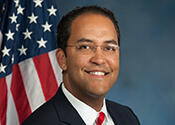
William Hose Flores Sr. (born February 25, 1954) is an American businessman and Republican politician who represented Texas’s 17th congressional district in the U.S. House of Representatives from January 3, 2011, to January 3, 2021. A member of the Republican Party, he served five terms in Congress during a significant period in American political history, participating in the legislative process and representing the interests of his Central Texas constituents. After leaving Congress, he continued his involvement in public affairs and the energy sector, serving as vice chair and interim chair of the Electric Reliability Council of Texas (ERCOT). He is also the former chief executive officer of Phoenix Exploration Company, an oil and natural gas firm.
Flores was born at F.E. Warren Air Force Base in Cheyenne, Wyoming, where his father was serving in the United States military. He is the son of Ruth Ann Theresa (née Kennedy) and Joe Pete Flores. He was raised in Stratford, a small community in the Texas Panhandle, and is of Spanish ancestry; his paternal forebears left Spain and settled in what is now Texas in 1725. Reflecting on his heritage, Flores has remarked that his family’s long presence in Texas dates to the early eighteenth century and that, while others may consider him Hispanic, he identifies himself first and foremost as an American.
Flores attended Texas A&M University, where he was active in campus leadership and student organizations. He graduated in 1976 with a Bachelor of Business Administration degree in accounting, cum laude. While at Texas A&M, he was a member of the Corps of Cadets, the MSC Student Conference on National Affairs, the Ross Volunteer Company, and Corps Staff, and he served as Student Body Vice President of Finance during his senior year. He became a licensed Certified Public Accountant in 1978. Pursuing further education while advancing his business career, he earned a Master of Business Administration degree from Houston Baptist University in 1985. Over the years, he remained closely connected to his alma maters, later serving as a past director and chairman of the board of the Association of Former Students of Texas A&M University and as a member, and vice chair, of the board of trustees of Houston Baptist University.
Before entering elective office, Flores built a lengthy career in the energy industry and in corporate finance. From 1990 to 1997, he served as chief financial officer (CFO) of Marine Drilling Companies, Inc., a publicly traded energy services firm. He then became CFO of Western Atlas Inc., another publicly traded energy services company, serving there from 1997 to 1998. From 2002 to 2005, he was senior vice president and CFO of Gryphon Exploration Company, an oil and gas exploration enterprise. In 2006, Flores led a group of five oil and gas industry executives in forming Phoenix Exploration Company, an oil and natural gas company focused on exploration along the Gulf Coast and in the Gulf of Mexico. As president, chief executive officer, and a director of Phoenix, he helped secure $350 million in capital commitments from private equity firms including Riverstone Holdings and Pine Brook Partners. He remained with Phoenix Exploration Company until his retirement in December 2009, when he stepped down to run for public office. In addition to his corporate roles, he served as a commissioner of the Texas Real Estate Commission by appointment of Governor Rick Perry and sat on the boards of Marine Drilling Companies, Inc., Phoenix Exploration Company, FreeBirds, Inc., The PARC, Inc., and the Alley Theatre of Houston. He also served on the board of the Private Enterprise Research Center at Texas A&M University.
In late 2009, Flores entered the Republican primary for Texas’s 17th congressional district, then represented by 10-term Democratic incumbent Chet Edwards. Motivated, as he stated, by concerns about the future of “the American dream,” he committed approximately $500,000 of his own funds to help self-finance his campaign. In the Republican primary runoff held on April 13, 2010, he defeated Rob Curnock, the 2008 Republican nominee, by a margin of 64 percent to 36 percent, a result that surprised many observers given Curnock’s prior performance against Edwards. During the primary, Flores received the endorsement of former U.S. Senator Phil Gramm, and after securing the nomination he was endorsed by former President George H. W. Bush and national Republican figures including John McCain, Mitt Romney, and Mike Huckabee. Through December 21, 2010, his campaign raised approximately $3.5 million, of which about $1.49 million came from Flores himself, and he spent roughly $3.3 million overall. In the general election on November 2, 2010, Flores defeated Edwards with 62 percent of the vote, the largest margin of defeat for any Democratic incumbent in the 2010 election cycle. Upon his swearing-in on January 3, 2011, he became the first Republican to represent Waco in Congress since Reconstruction.
During his five terms in the U.S. House of Representatives, Flores consistently aligned with conservative Republican positions. He advocated limited government and lower taxes, opposed the continued spending associated with the American Recovery and Reinvestment Act, and supported making the Bush-era tax cuts permanent. He took anti-abortion positions and favored stronger enforcement along the U.S.–Mexico border. Reflecting his professional background, he was an advocate for American energy security, supporting the construction of new nuclear power plants to help the United States achieve energy self-sufficiency and backing incentives for the development of solar and wind power. On July 18, 2013, he introduced the Protecting States’ Rights to Promote American Energy Security Act (H.R. 2728; 113th Congress), which would require the federal government to defer to individual states regarding regulations governing hydraulic fracturing; the bill passed the House of Representatives on November 20, 2013. Flores was a member of the House Committee on Energy and Commerce, serving on its Subcommittees on Energy and Power, Environment and the Economy, and Oversight and Investigations. He also served on the House Committee on Veterans’ Affairs, including the Subcommittees on Economic Opportunity and on Health. In addition, he belonged to several caucuses, including the House Baltic Caucus, the Congressional Western Caucus, the Veterinary Medicine Caucus, the Conservative Republican Study Committee, and the Congressional Hispanic Conference.
Flores’s congressional career included both leadership roles within the Republican Conference and involvement in high-profile national policy debates. On November 18, 2014, he was elected chairman of the House Republican Study Committee, a key conservative policy caucus, winning on the second ballot with 84 votes to Representative Mick Mulvaney’s 57. He supported President Donald Trump’s 2017 executive order temporarily restricting entry to the United States by certain foreign nationals from predominantly Muslim countries, stating that taking a 120-day pause to evaluate the effectiveness of vetting procedures was, in his view, a prudent measure. In December 2020, near the end of his final term, he was among 126 Republican members of the House who signed an amicus brief in support of Texas v. Pennsylvania, a lawsuit filed at the U.S. Supreme Court contesting the results of the 2020 presidential election in which Joe Biden defeated President Trump; the Court declined to hear the case, ruling that Texas lacked standing under Article III of the Constitution to challenge other states’ election results. During his tenure, Flores also drew attention for limiting certain forms of constituent access, including blocking some constituents from contacting him through social media platforms.
Flores was reelected four times after his initial victory. In the general election of November 8, 2016, he won a fourth term with 149,417 votes (60.8 percent), defeating Democrat William Matta, who received 86,603 votes (35.2 percent), and Libertarian Clark Patterson, who received 9,708 votes (4.0 percent). On November 6, 2018, he secured a fifth term with 134,375 votes (56.9 percent), defeating Democrat Rick Kennedy, who received 97,574 votes (41.3 percent), and Libertarian Peter Churchman, who received 4,415 votes (1.9 percent). In 2019, Flores announced that he would not seek reelection in 2020, concluding his service in Congress after five terms. He left office on January 3, 2021, and was succeeded by Republican Pete Sessions, the former representative for Texas’s 32nd congressional district.
Following his departure from Congress, Flores remained active in public policy and higher education governance, particularly in areas related to energy and economic policy. He has served as vice chair and interim chair of the Electric Reliability Council of Texas (ERCOT), the nonprofit corporation that manages the flow of electric power to most Texas customers. He continues to serve on the board of the Private Enterprise Research Center at Texas A&M University and on the board of trustees of Houston Baptist University, where he holds the position of vice chair. Through these roles, Flores has continued to engage in issues at the intersection of business, energy, and public policy beyond his decade of service in the U.S. House of Representatives.
Congressional Record