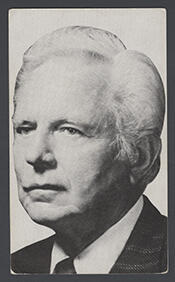
Benjamin Stanton (June 4, 1809 – June 2, 1872) was an American politician and lawyer who represented Ohio in the United States House of Representatives for four terms and served as the sixth lieutenant governor of Ohio from 1862 to 1864. A member of the Whig, Opposition, and later Republican parties, he was active in state and national politics during a transformative period in American history, including the years leading up to and during the Civil War.
Stanton was born on June 4, 1809, in Mount Pleasant, Jefferson County, Ohio, the son of Elias Stanton and Martha (Wilson) Stanton. He pursued academic studies in his youth and learned the tailor’s trade, an occupation that provided his early livelihood. Raised in a region of Ohio that was developing rapidly in the early nineteenth century, he combined practical training with self-directed study, laying the groundwork for a later professional career in the law and in public service.
After deciding to enter the legal profession, Stanton studied law and was admitted to the bar in 1834. He then settled in Bellefontaine, Logan County, Ohio, where he commenced the practice of law. His legal work in Bellefontaine brought him into contact with local civic affairs and helped establish his reputation as an able attorney. This professional standing soon translated into opportunities for elective office at the state level.
Stanton’s political career began in the Ohio General Assembly. He served as a member of the Ohio Senate from 1841 to 1843, participating in state legislative deliberations at a time when Ohio was expanding economically and demographically. In 1850 he was chosen as a delegate to the Ohio state constitutional convention, where he took part in the revision of the state’s fundamental law. His work in the Senate and at the convention enhanced his profile as a legislator and prepared him for service in the national Congress.
Stanton was first elected to the United States House of Representatives as a Whig, representing Ohio in the Thirty-second Congress from March 4, 1851, to March 3, 1853. After a brief interval out of office, he returned to Congress as an Opposition Party candidate to the Thirty-fourth Congress, beginning March 4, 1855. As the Whig Party collapsed and new political alignments formed, Stanton aligned with the emerging Republican Party and was reelected as a Republican to the Thirty-fifth and Thirty-sixth Congresses, serving continuously from March 4, 1855, to March 3, 1861. Over these four terms in office, he contributed to the legislative process during a significant period in American history, representing the interests of his Ohio constituents as the nation moved toward civil war. During the Thirty-sixth Congress he served as chairman of the Committee on Military Affairs, a post that placed him at the center of congressional oversight of military policy on the eve of the conflict.
In 1862 Stanton was elected lieutenant governor of Ohio, becoming the sixth person to hold that office and serving from 1862 to 1864, during the American Civil War. A member of the Republican Party in this period, he participated in the state’s wartime administration. That same year, following the Battle of Shiloh at Pittsburg Landing, Tennessee, in April 1862, Stanton visited the Union Army and subsequently published a sharply critical statement about the conduct of Union generals. He asserted that Major General Ulysses S. Grant and Brigadier General Benjamin M. Prentiss, both appointed from Illinois, should be court-martialed and shot for their roles in the battle. General William Tecumseh Sherman of Ohio issued a vigorous public rebuttal defending the officers and the army’s performance. Stanton then extended his criticism to Sherman as well. In his later memoirs, Sherman wrote that once “the good people of the North had begun to have their eyes opened,” Stanton’s attacks on Grant were so thoroughly discredited that Stanton was widely referred to as “the late Mr. Stanton” and, according to Sherman, never again held public office of significance. Stanton’s subsequent departure from Ohio for West Virginia in the years after the war appeared to contemporaries to confirm this decline in his political fortunes.
After leaving statewide office, Stanton resumed his legal career. In 1865 he moved to Martinsburg, in what had become the state of West Virginia during the Civil War, and engaged in the practice of law there. Two years later, in 1867, he relocated to Wheeling, West Virginia, then an important commercial and political center, where he continued to practice law. He remained in Wheeling for the rest of his life. Stanton died there on June 2, 1872, two days before his sixty-third birthday, and was interred in Greenwood Cemetery in Wheeling, West Virginia.
Congressional Record