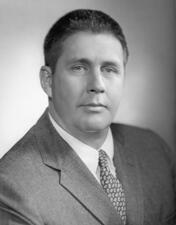
Benjamin Atwood Smith II (March 26, 1916 – September 26, 1991) was an American politician and businessman who served as a United States Senator from Massachusetts from December 1960 until November 1962. A member of the Democratic Party, he held the Senate seat for one term during a significant period in American history, contributing to the legislative process and representing the interests of his Massachusetts constituents.
Smith was born in Gloucester, Massachusetts, and was named for his grandfather, Benjamin A. Smith. He was the son of R. Russell Smith and Grace Smith, members of a long-established Gloucester family. Raised in Gloucester, he attended the local public schools and distinguished himself early in athletics and civic life. In 1933 he was captain of the Gloucester High School football team, reflecting a leadership role that would later carry into public service.
After his early education in Gloucester, Smith continued his studies at Governor Dummer Academy (now The Governor’s Academy) in Byfield, Massachusetts. He then enrolled at Harvard University, from which he graduated. At Harvard he played fullback on the football team under coach Dick Harlow and shared a room with John F. Kennedy, forming a close personal friendship with the future president that would have a lasting influence on his political career. His Harvard years placed him within a network of future political leaders and reinforced his interest in public affairs.
During World War II, Smith served for four years in the United States Navy. He was assigned to duty in the Pacific theater, where he served as commander on an anti-submarine, anti-torpedo vessel. This naval service during a global conflict provided him with experience in leadership and operations under pressure and contributed to his later public reputation as a veteran and civic-minded businessman.
Following the war, Smith returned to Gloucester and became active in local business and government. For many years he was the chief executive of his family’s enterprise, the Merchants Box Company in Gloucester, a position that tied him closely to the city’s commercial and maritime economy. He entered local politics as a member of the Gloucester School Committee and later served on the Gloucester City Council. He was also a trustee of Addison Gilbert Hospital, reflecting his engagement with community institutions. From 1954 to 1955 he served as Mayor of Gloucester. Under the city’s Plan E form of government then in effect, the mayoralty was a largely ceremonial office; the mayor was chosen from among the city councilors, while day-to-day administration was conducted by a professional city manager. Even so, the position enhanced Smith’s public profile and deepened his experience in municipal affairs.
Smith’s long-standing friendship with John F. Kennedy proved decisive in his elevation to national office. Kennedy, who had been reelected in 1958 to a six-year term in the United States Senate from Massachusetts, resigned his Senate seat on December 22, 1960, after being elected President of the United States. Acting on Kennedy’s advice and “in the interest of promoting party unity,” Massachusetts Governor Foster Furcolo appointed Smith to fill the vacated Senate seat. Smith, a close friend of the Kennedy family, was widely regarded as a “seat warmer” until Kennedy’s younger brother Edward M. “Ted” Kennedy reached the constitutionally required age of thirty to serve in the Senate. Benjamin A. Smith thus entered the Senate in December 1960 as a Democrat and served until November 6, 1962, when Ted Kennedy won the special election to complete the term. During his single term, Smith participated in the work of the Senate at a time marked by the early years of the Kennedy administration and Cold War tensions, contributing to the legislative process and representing Massachusetts in the upper chamber of Congress from 1960 to 1963.
After leaving the Senate, Smith continued to serve in roles connected to national policy and international affairs. In 1963, President Kennedy appointed him chairman of the United States delegation to the North Pacific Fisheries Conference, a multilateral meeting involving the United States, the Soviet Union, Canada, and Japan. In that capacity, Smith was involved in discussions over fisheries management and resource use in the North Pacific, reflecting both his maritime background from Gloucester and the broader foreign policy and economic concerns of the period.
In his personal life, Smith married Barbara M. Mechem of Lake Forest, Illinois, and Annisquam, Massachusetts. The couple had five children: sons R. Russell Smith II and Benjamin A. Smith III—who became known as an ice hockey player and coach—and daughters Barbara (Smith) Ramsey, Susan (Smith) Crotty, and Cathleen Smith. Smith remained closely tied to Gloucester throughout his life. He died there on September 26, 1991, after a long illness, at Addison Gilbert Hospital, where he had once served as a trustee. He was buried in Calvary Cemetery in Gloucester, closing a life that linked local business and civic leadership with service in the United States Senate during a pivotal era in American politics.
Congressional Record