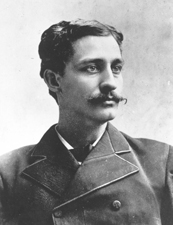
Benjamin Franklin Shively (March 20, 1857 – March 14, 1916) was an American politician and lawyer who served as a United States representative and senator from Indiana. A member of the Democratic Party, he contributed to the legislative process during multiple terms in Congress, ultimately serving in the Senate from 1909 until his death in 1916. His congressional career spanned a significant period in American history, including the late Gilded Age and the Progressive Era, during which he represented the interests of his Indiana constituents and played a visible role in national debates over foreign and domestic policy.
Shively was born on March 20, 1857, in St. Joseph County, Indiana. He was raised in northern Indiana and came of age in the years following the Civil War, a context that shaped his early interest in public affairs and the law. Before entering national politics, he pursued legal studies and was admitted to the bar, establishing himself as a practicing lawyer in South Bend, Indiana. His legal career provided the foundation for his later work in Congress, giving him experience with the practical application of law and the concerns of local citizens and businesses.
Shively’s formal education included legal training that prepared him for admission to the bar and practice in Indiana courts. He built a reputation in South Bend as a capable attorney, which in turn helped launch his political career. Through his work as a lawyer and his involvement in Democratic Party activities, he gained recognition as an articulate advocate and emerged as a viable candidate for federal office. This combination of legal expertise and political engagement positioned him to seek election to the United States House of Representatives in the 1880s.
Shively first entered Congress as a United States representative from Indiana in the mid-1880s. He served a brief initial term in the House from 1884 to 1885, and then returned to the House after winning election as a Democrat to the Fiftieth, Fifty-first, and Fifty-second Congresses. In these later consecutive terms he served from March 4, 1887, to March 4, 1893. During his years in the House, he participated in the democratic process at a time of rapid industrialization and contentious debates over tariffs, monetary policy, and federal regulation. In 1892 he chose not to be a candidate for renomination and left the House at the expiration of his term in March 1893.
After leaving the House of Representatives, Shively resumed the practice of law in South Bend, returning to his legal career while remaining active in Indiana Democratic politics. He sought higher office in his home state and, in 1896, was the Democratic candidate for Governor of Indiana, though he was unsuccessful in that bid. A decade later, in 1906, he again attempted to return to national office as a candidate for election to the Sixtieth Congress, but this campaign also ended in defeat. Despite these setbacks, Shively’s continued prominence in party affairs and his established record in the House kept him a significant figure in Indiana and national Democratic circles.
Shively’s most consequential period of public service began with his election to the United States Senate in 1909. He was elected as a Democrat and took his seat on March 4, 1909. He was reelected in 1914 and served continuously until his death on March 14, 1916. During his Senate career he held several important committee assignments. He served as chairman of the Committee on Pacific Railroads during the Sixty-second Congress, where he dealt with issues related to transportation, infrastructure, and federal oversight of rail interests. He was also a member of the Committee on Pensions during the Sixty-third and Sixty-fourth Congresses, participating in deliberations over benefits for veterans and their families, a matter of continuing importance in the decades after the Civil War and the Spanish-American War.
Shively came to particular prominence in the Senate through his work on foreign policy. He served as chairman of the Committee on Foreign Relations, a position that placed him at the center of debates over the United States’ role in world affairs during the administration of President Woodrow Wilson. In this capacity, he personally advised President Wilson on the situation in Mexico during the Mexican Revolution, helping to shape the administration’s response to the instability on the southern border. Shively was known as a political ally and vocal supporter of the Wilson administration, backing its broader foreign and domestic agenda during a period that included growing international tensions leading up to World War I.
Benjamin Franklin Shively died in office on March 14, 1916, while serving as a United States senator from Indiana. His death placed him among the members of Congress who died in office in the early twentieth century. Following his passing, his career and public service were commemorated in Congress, including in memorial addresses delivered in the House of Representatives and the Senate in 1917. Over the course of his public life, from his early service in the House to his influential role in the Senate, Shively participated actively in the legislative process and helped shape national policy during a transformative era in American history.
Congressional Record