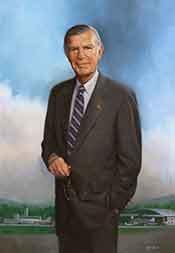
Benjamin Franklin Junkin (November 12, 1822 – October 9, 1908) was an American politician, lawyer, and judge who served a single term in the United States House of Representatives, representing the 16th congressional district of Pennsylvania from 1859 to 1861 as a Republican in the 36th United States Congress. His congressional service took place during a critical period in the nation’s history immediately preceding the Civil War, and he participated in the legislative process as the emerging Republican Party was consolidating its influence in national politics.
Junkin was born near Carlisle, Cumberland County, Pennsylvania. He was raised in south-central Pennsylvania, a region that would remain the center of his personal and professional life. Details of his early family life are sparse in the historical record, but his subsequent educational and professional choices reflect the opportunities available to a young man of ambition in antebellum Pennsylvania, where law and public service were common avenues to prominence.
He pursued his education at Lafayette College in Easton, Pennsylvania, an institution that was then developing a reputation for classical and legal studies. After completing his collegiate education, Junkin studied law and was admitted to the bar. He commenced the practice of law in New Bloomfield, the county seat of Perry County, Pennsylvania. His legal practice in this rural but politically active region helped establish his reputation and provided the foundation for his later judicial and political career.
Junkin’s professional life encompassed work as a lawyer and judge, roles in which he was engaged before, during, and after his time in Congress. As a practicing attorney, he represented local clients and participated in the legal affairs of Perry County and the surrounding area. His standing at the bar and his involvement in public affairs contributed to his emergence as a candidate for national office under the banner of the Republican Party, which was then relatively new but rapidly gaining strength in Pennsylvania.
In 1858, Junkin was elected as a Republican to the 36th United States Congress, representing Pennsylvania’s 16th congressional district. He served from March 4, 1859, to March 3, 1861. During this single term in the House of Representatives, he contributed to the legislative process at a time marked by escalating sectional tensions over slavery, states’ rights, and the future of the Union. As a member of the Republican Party representing Pennsylvania, he participated in debates and votes that reflected the concerns of his constituents in a state that was economically diverse and strategically important on the eve of the Civil War. His service in Congress occurred during a significant period in American history, and he took part in the democratic process and the representation of his district’s interests in the national legislature.
After leaving Congress at the conclusion of his term in 1861, Junkin returned to his legal career in Pennsylvania. He resumed the practice of law and continued his involvement in public life, including service as a judge, drawing on his experience as both a practitioner and a former legislator. His post-congressional years were spent largely in the legal and civic affairs of his home region, where he remained a respected figure. Junkin lived through the Civil War, Reconstruction, and the profound economic and social changes of the late nineteenth century, witnessing the transformation of the nation whose early crisis he had observed from the halls of Congress.
Benjamin Franklin Junkin died on October 9, 1908. He was interred in New Bloomfield Cemetery in New Bloomfield, Pennsylvania. His long life spanned from the era of Jacksonian democracy through the dawn of the twentieth century, and his career as a lawyer, judge, and one-term Republican member of Congress reflected the pathways of public service available to Pennsylvania professionals in the nineteenth century.
Congressional Record