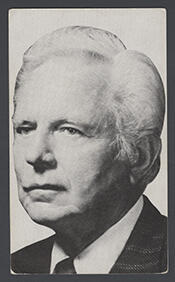
Benjamin Jones was a United States Representative from Ohio who lived from 1787 to 1861. Identified in historical records as “Benjamin Jones (congressman),” he emerged in the early national period and built a public career that culminated in service in the U.S. House of Representatives. His lifetime spanned from the early years of the American republic through the eve of the Civil War, a period marked by rapid territorial expansion, the rise of new political parties, and intensifying sectional conflict over slavery and states’ rights.
Born in 1787, Jones came of age in the formative decades following American independence, when Ohio and the Old Northwest were being settled and organized into states. Although detailed documentation of his early life and family background is limited, his later prominence in public affairs suggests that he benefited from the expanding opportunities in law, commerce, or local governance that were common avenues into politics for ambitious young men of his generation. Growing up as the federal union was still taking shape, he would have been influenced by the debates over the Constitution, federal power, and the balance between agrarian and commercial interests that defined the early republic.
Jones’s education, like that of many early nineteenth-century public figures, likely combined basic formal schooling with self-directed study, particularly in law, public administration, or related fields that prepared him for civic leadership. In Ohio, which achieved statehood in 1803, aspiring officeholders often advanced through local offices, legal practice, or business leadership before seeking higher office. By the time Jones entered national politics, he had established himself sufficiently within his community and party to secure election to Congress, reflecting both personal ability and the growing political importance of Ohio in the national arena.
As a U.S. Representative from Ohio, Benjamin Jones participated in the legislative life of a rapidly changing nation. Serving in the House of Representatives placed him at the center of debates over internal improvements, westward expansion, tariffs, banking, and the evolving conflict over slavery in the territories. Ohio’s congressional delegation during this period played a significant role in shaping policies affecting the Midwest, including transportation infrastructure and land settlement, and Jones’s tenure would have aligned him with these regional priorities. His service in Congress identified him as part of the generation of lawmakers who navigated the transition from the early party systems of Federalists and Democratic-Republicans to the later alignments that preceded the Civil War.
Jones’s congressional career also reflected the broader political development of Ohio, which by the mid-nineteenth century had become a key state in national elections and a crossroads between North and West. As an Ohio representative, he would have been expected to balance local concerns—such as agricultural interests, emerging industry, and river and canal commerce—with the broader national issues debated in Washington. His work in Congress contributed to the legislative record of a state that increasingly influenced presidential politics and national policy.
After his period of congressional service, Jones lived through the turbulent 1850s, when the Compromise of 1850, the Kansas-Nebraska Act, and the rise of the Republican Party reshaped the political landscape. Although specific details of his later professional or civic activities are not extensively recorded, his status as a former member of Congress suggests that he remained a respected figure in his community and likely continued to engage in public affairs, legal practice, or business. His experiences would have given him a front-row view of the mounting tensions that ultimately led to secession and civil war.
Benjamin Jones died in 1861, the year the Civil War began, closing a life that had run parallel to the first great era of American expansion and political transformation. Remembered in historical references as a U.S. Representative from Ohio, he stands among the early nineteenth-century lawmakers who helped shape federal policy during a critical period in the nation’s development. His career illustrates the rise of Ohio as a political power and the role of its representatives in the evolving story of the United States.
Congressional Record