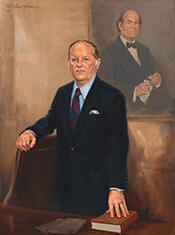
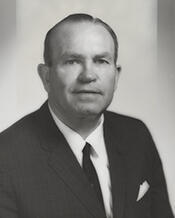
Benjamin Huger is the name of several prominent men from South Carolina whose public service spans from the American Revolution through the early republic and into the Civil War era. Collectively, these men—Benjamin Huger (American Revolution) (1746–1779), Benjamin Huger (congressman) (1768–1823), and Benjamin Huger (Confederate general) (1805–1877)—were associated with the political, military, and social leadership of South Carolina over more than a century. They were members of a prominent Huguenot-descended family centered in the lowcountry region around Charleston, a community that produced numerous officeholders, planters, and military officers in colonial, revolutionary, and antebellum America.
The earliest of these figures, Benjamin Huger (American Revolution) (1746–1779), came of age in colonial South Carolina during a period of growing tension between the British Crown and its North American colonies. Raised in the planter society of the lowcountry, he was part of the generation that moved from provincial politics into open resistance as the American Revolution unfolded. Like many South Carolina patriots, he aligned himself with the revolutionary cause and entered militia service as the colony organized its defenses against British incursions along the coast and in the backcountry.
During the Revolutionary War, Benjamin Huger (1746–1779) served as a militia officer in South Carolina, participating in the defense of the state as British forces sought to secure the strategically important port of Charleston. Militia officers in South Carolina often combined local leadership with military responsibility, raising and leading companies composed of neighbors and dependents. In this capacity, Huger took part in the campaigns around Charleston that were marked by skirmishing, shifting lines of control, and increasing British pressure on the city and surrounding countryside. His service ended abruptly when he was killed near Charleston in 1779, during the period of intensified British operations that preceded the formal siege and capture of the city in 1780. His death near Charleston placed him among the South Carolina patriots who lost their lives in defense of the state during the war for independence.
The second prominent figure bearing the name, Benjamin Huger (congressman) (1768–1823), was born in South Carolina in the early years of American independence and grew up in a political culture shaped by the Revolution in which his elder namesake had fought. He was part of the post-revolutionary generation of leaders who helped establish and stabilize the institutions of the new republic at both the state and federal levels. Educated within the elite circles of South Carolina society and connected to the state’s influential planter and mercantile families, he was well positioned to enter public life as the United States developed its constitutional system and party politics.
Benjamin Huger (1768–1823) served in both state and federal legislatures, reflecting the dual focus of early American politicians who moved between statehouses and the national capital. In South Carolina, he participated in the work of the state legislature during a period when issues of representation, economic development, and the balance of power between lowcountry and upcountry interests were central concerns. At the federal level, he served in the United States Congress as part of the evolving party system of the early nineteenth century, when debates over foreign policy, commerce, internal improvements, and the scope of federal authority defined national politics. His legislative career placed him among the South Carolinians who helped articulate the state’s interests within the broader Union during the first decades after ratification of the Constitution. He remained active in public affairs until his death in 1823, by which time South Carolina’s political class was turning toward the sectional controversies that would dominate the antebellum period.
A later member of the family, Benjamin Huger (Confederate general) (1805–1877), extended the Huger name into the military history of the mid-nineteenth century. Born in 1805, he belonged to the generation that came of age in the aftermath of the War of 1812 and entered national service as the United States expanded territorially and militarily. Trained as a professional soldier, he joined the United States Army and pursued a regular army career at a time when the nation was engaged in frontier duties, coastal defense, and, eventually, conflict with Mexico. His background in a prominent South Carolina family, combined with formal military education and experience, prepared him for higher command.
Benjamin Huger (1805–1877) was a veteran of the Mexican–American War, a conflict fought from 1846 to 1848 that significantly enlarged the territory of the United States. In that war he served as a United States Army officer, gaining experience in field operations, logistics, and command that would later inform his role in the Civil War. With the secession of Southern states and the outbreak of the Civil War in 1861, he resigned from United States service and entered the Confederate military. As a Civil War Confederate general, he held important commands in the Confederate Army, particularly in the Eastern Theater, where he was involved in the defense of key positions and in major campaigns early in the conflict. His service illustrated the divided loyalties of professional officers from Southern states who left long-standing federal careers to join the Confederacy. After the war, he lived through the Reconstruction era, witnessing the political and social transformation of the South before his death in 1877.
Across these three generations, the men named Benjamin Huger from South Carolina—militia officer (1746–1779), legislator (1768–1823), and Confederate general (1805–1877)—embodied the evolving roles of Southern elites in American history, from colonial resistance and revolutionary warfare, through the formation and consolidation of the federal Union, to the sectional crisis, civil war, and its aftermath. Their lives collectively trace the arc of South Carolina’s engagement with national events over more than a century.
Congressional Record