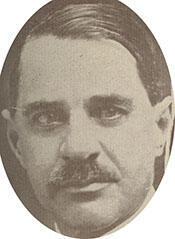
Benjamin F. Deming (August 12, 1790 – July 11, 1834) was an American merchant, jurist, and politician who served briefly as a U.S. Representative from Vermont. He was born on August 12, 1790, in Danville, in what was then the Vermont Republic. Little is recorded about his parents or early family life, but he pursued academic studies in his youth and established himself as a merchant in his native community, laying the foundation for a public career closely tied to the civic and legal affairs of Caledonia County.
Deming married Eunice Clark on June 6, 1816. The couple made their home in Danville and had five children together. His family life in Danville coincided with his growing prominence in local public service, as he balanced his mercantile pursuits with increasingly responsible positions in the county’s judicial and governmental institutions.
Deming’s formal public career began in the judiciary of Caledonia County. He served as clerk of the Caledonia County Court from 1817 until 1833, a role that placed him at the center of the county’s legal administration for more than fifteen years. In addition, from 1822 until 1833 he was probate judge in Vermont, overseeing matters related to estates and guardianships. His reputation for diligence and competence in these judicial positions led to further responsibilities at the state level. From 1827 until 1832, Deming served as a member of the Governor’s Council of Vermont, participating in the executive advisory body that helped shape state policy during a period of political realignment in the early nineteenth century.
Building on this record of local and state service, Deming entered national politics as a member of the Anti-Masonic Party, a movement that arose in opposition to what its adherents viewed as the undue influence and secrecy of Freemasonry in public life. Representing Vermont, he was elected as an Anti-Masonic candidate to the Twenty-third Congress and took his seat in the U.S. House of Representatives on March 4, 1833. His tenure in Congress occurred during a significant period in American history, marked by debates over federal power, economic policy, and political reform. As a member of the Anti-Masonic Party representing Vermont, Benjamin F. Deming contributed to the legislative process during his term in office, participating in the democratic process and representing the interests of his constituents in the national legislature.
Deming’s service in Congress was cut short by illness. In the summer of 1834, while in Washington, D.C., he became seriously ill and decided to return home to Vermont. He died en route on July 11, 1834, at Saratoga Springs, New York, while still officially serving as a member of the House of Representatives. His death brought an abrupt end to his brief but notable congressional career. Benjamin F. Deming was interred at the Danville Green Cemetery in Danville, Vermont. In addition to his burial in Vermont, he is commemorated by a cenotaph at the Congressional Cemetery in Washington, D.C., reflecting his status among the members of the United States Congress who died in office between 1790 and 1899.
Congressional Record