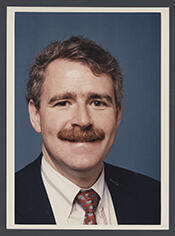
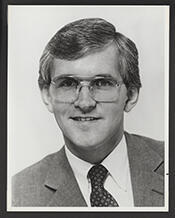
Ben C. Eastman (October 24, 1812 – February 2, 1856) was an American lawyer, Democratic politician, and Wisconsin pioneer who served two terms in the U.S. House of Representatives, representing Wisconsin’s 2nd congressional district from 1851 to 1855. He previously served as secretary of the Council of the Wisconsin Territory during the 4th Wisconsin Territorial Assembly, and played a notable role in the early political and legal development of southwestern Wisconsin.
Benjamin C. Eastman was born in the town of Strong, in what was then the District of Maine, part of the Commonwealth of Massachusetts. He was one of twelve children born to Samuel Eastman and his wife Jane (née Hitchcock). His father was a successful merchant in Maine and served as a state senator, and the family traced its American lineage to Roger Eastman, who was born in Wales and emigrated to the Massachusetts Bay Colony in 1638 aboard the ship Confidence. Eastman attended public schools and received an academic education in Maine before turning to the study of law. He read law under Judge William Emmons of Hallowell, Maine, and later continued his legal training under Judge Hall in New York. In 1841 he married Charlotte Sophia Sewall of Hallowell, Maine; the couple had no children.
In 1838, Eastman traveled west to the Wisconsin Territory, part of a broader movement of New Englanders and other easterners seeking opportunity in the developing Upper Midwest. He initially settled in Green Bay, where he was admitted to the bar and began the practice of law in partnership with Morgan Lewis Martin, a prominent territorial politician and lawyer. After about a year in Green Bay, Eastman moved south to Grant County and settled in Platteville, which remained his home for the rest of his life. Several of his brothers would eventually follow him to Wisconsin and establish their own careers there, further entrenching the Eastman family in the civic and political life of the state.
Eastman quickly became involved in territorial governance. At the second session of the 4th Wisconsin Territorial Assembly, he was selected to serve as secretary of the Territorial Council, the upper legislative chamber, and he was retained in that position for the third and fourth sessions. He resigned midway through the fourth session on January 19, 1846. In 1847, he was nominated by the Democratic Party for the office of county commissioner in Grant County, but that year the Whig Party carried nearly every office in the county, and he was not elected. In 1848, reflecting both his entrepreneurial and developmental interests, Eastman commissioned a survey and plat of a section of land he owned in the town of Wingville, thereby establishing the settlement of Montfort. That same year, when the first session of the Wisconsin circuit court in Grant County was held in October 1848, Eastman was among ten lawyers admitted to practice before that court. In 1849, he was elected chairman of the Platteville town board, which made him ex officio a member of the Grant County Board of Supervisors, further solidifying his role in local governance.
Eastman’s growing prominence in law and local politics led to his election to Congress. In 1850, he ran for the U.S. House of Representatives on the Democratic ticket in Wisconsin’s 2nd congressional district, which at that time comprised the entire western half of the state. He defeated the incumbent Whig congressman, Orsamus Cole, and took his seat in the 32nd Congress on March 4, 1851. He was re-elected in 1852 and served in the 33rd Congress from March 4, 1853, to March 3, 1855. As a member of the Democratic Party representing a large and rapidly developing frontier district, Eastman participated in the legislative process during a significant period in American history, marked by sectional tensions and debates over expansion and governance in the years leading up to the Civil War. He represented the interests of his Wisconsin constituents in this national context, contributing to the democratic process during his two terms in office. In 1854, he declined to run for a third term.
After leaving Congress in 1855, Eastman returned to Platteville and resumed the practice of law. His extended family continued to play important roles in Wisconsin’s civic life. His eldest brother, William Henry Eastman (born 1808), settled in Green Bay in the 1870s after a career in the East. Another brother, Harry Eugene Eastman (born 1819), became the third mayor of Green Bay and later served as a lieutenant colonel in the 2nd Wisconsin Cavalry Regiment during the American Civil War. John A. Eastman (born 1821) was the second lawyer to settle in Fond du Lac, Wisconsin, served in the Wisconsin Senate, and married a daughter of Congressman Mason C. Darling. George W. Eastman (born 1824) followed Ben to Wisconsin and settled with him in Platteville in 1850; he was a physician and banker and served as a surgeon and medical inspector for the Union Army during the Civil War.
Ben C. Eastman died in Platteville, Wisconsin, on February 2, 1856, after an illness of several weeks. He was interred in Forest Hill Cemetery in Madison, Wisconsin. His career as a lawyer, territorial official, local leader, and two-term Democratic member of Congress reflected the experiences of many early Wisconsin pioneers who helped shape the institutions of the new state in the mid-nineteenth century.
Congressional Record