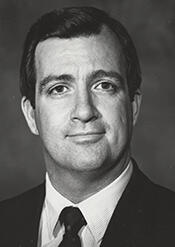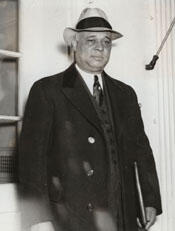
Arthur Wergs Mitchell, Sr. (December 22, 1883 – May 9, 1968), was a U.S. Representative from Illinois, a member of the Democratic Party, and a civil rights activist. Representing Illinois’s 1st congressional district for his entire congressional career from 1935 to 1943, he served four terms in the United States House of Representatives and was the only African American in Congress during that period. A supporter of President Franklin D. Roosevelt’s New Deal, Mitchell was the first African American to be elected to the United States Congress as a Democrat, marking a significant shift in Black political alignment during the mid-twentieth century.
Mitchell was born on December 22, 1883, in Lafayette, Alabama, to Taylor Mitchell and Emma (Patterson) Mitchell. Growing up in the segregated South, he experienced firsthand the constraints of Jim Crow, which shaped his later political and legal activism. At the age of fourteen he left home to attend the Tuskegee Institute in Alabama, an institution founded by Booker T. Washington. While at Tuskegee, Mitchell worked on a farm and served as an office boy to Washington, gaining both practical experience and exposure to Washington’s philosophy of self-help and racial uplift. His early years at Tuskegee provided him with educational opportunities that were otherwise largely unavailable to African Americans in the Deep South at the time.
After his studies at Tuskegee, Mitchell pursued further education and professional training. He briefly attended Columbia University in New York City and qualified for the bar, preparing for a career in law. He later moved to Chicago, Illinois, where he established himself professionally and became active in civic and political life. In addition to his legal work, Mitchell joined Phi Beta Sigma Fraternity, Inc., a historically African American fraternity, and rose to national prominence within the organization, serving as its sixth International President from 1926 to 1934. His leadership in Phi Beta Sigma reflected his growing stature as a spokesman for African American advancement and helped build the networks that would support his later political career.
Mitchell’s early political activity in Chicago was initially aligned with the Republican Party, which had long been the traditional political home for African American voters. He worked for the Republican Party in the city and engaged in local political organizing. However, by 1932 he became disillusioned with what he viewed as entrenched Black Republican leadership and limited opportunities for his own advancement. That year he switched to the Democratic Party, reportedly because he was “ambitious and impatient with the entrenched black Republican leadership,” and sought “a chance for personal advancement in the concurrent rise of the national Democratic Party.” His shift anticipated the broader realignment of many African American voters toward the Democratic Party during the New Deal era.
In 1934 Mitchell ran for Congress as a Democrat from Illinois’s 1st congressional district, challenging incumbent Republican Representative Oscar De Priest, who was also African American. During the campaign, Mitchell emphasized his strong support for the New Deal and President Roosevelt’s public relief and recovery programs, arguing that these policies offered tangible benefits to his largely Black and working-class constituency. He also criticized De Priest’s opposition to segregation as ineffective, contending that more pragmatic engagement with the prevailing political order would yield better results. Mitchell won the election with approximately 53 percent of the vote. After the election, De Priest acknowledged the historic nature of Mitchell’s victory, telling him, “I congratulate you as [the] first Negro Democratic congressman.”
Arthur Wergs Mitchell took his seat in the Seventy-fourth Congress on January 3, 1935, and served continuously through the Seventy-seventh Congress, ending his service on January 3, 1943. Throughout his four terms, he was the only African American in Congress, and he used his position to address issues of racial discrimination and economic inequality. A consistent supporter of the New Deal, he backed federal relief, public works, and social welfare measures designed to alleviate the hardships of the Great Depression. At the same time, he introduced bills aimed at banning lynching and combating discrimination, seeking to use federal power to protect African American citizens from racial violence and unequal treatment. His legislative record reflected both his loyalty to the Roosevelt administration and his commitment to civil rights, even as he navigated the constraints of a Congress still dominated by Southern segregationists.
Mitchell’s civil rights advocacy extended beyond the legislative arena into the courts. In a widely noted incident, he was forced into a segregated train car while traveling on the Illinois Central and Rock Island Railroads just before the train crossed into Arkansas. Viewing this as a violation of his rights as an interstate passenger, he filed suit against the railroads. The case ultimately reached the United States Supreme Court as Mitchell v. United States. The Court ruled that the railroad had violated the Interstate Commerce Act by subjecting him to discriminatory treatment in interstate travel. This decision contributed to the gradual erosion of legalized segregation in transportation and underscored Mitchell’s role as both a legislator and a litigant in the struggle against Jim Crow.
Despite having campaigned against Oscar De Priest’s civil rights record as weak, Mitchell himself faced criticism from some civil rights advocates who believed he did not go far enough in challenging segregation and racial injustice. The National Association for the Advancement of Colored People (NAACP), for example, judged one of his proposed anti-lynching bills as too lenient and insufficiently forceful in addressing mob violence. These critiques highlighted the tensions within the African American community over strategy and tactics during an era when federal civil rights legislation remained difficult to achieve. Nevertheless, Mitchell continued to speak out against racial oppression. As his final term drew to a close, he chose not to seek re-election in 1942, voluntarily ending his congressional career. In one of his last acts on the House floor, he condemned politicians who, in his view, would sooner accommodate the Axis powers than grant African Americans their basic rights, pointedly comparing atrocities committed by Nazi Germany and Imperial Japan with recent lynchings in places such as Shubuta, Mississippi.
After leaving Congress in 1943, Mitchell withdrew from national political life and relocated to Virginia. He settled near Petersburg, where he became a farmer and worked a 12-acre (4.9-hectare) property. In this quieter phase of his life, he lived away from the public spotlight that had accompanied his years in Washington, D.C., but remained a symbolic figure as the first African American Democrat in Congress and a New Deal-era advocate for Black constituents. Arthur Wergs Mitchell died at his home in Petersburg, Virginia, on May 9, 1968. His career spanned the transition from the Jim Crow South of his youth to the modern civil rights era, and his service in Congress during a critical period in American history marked an important chapter in the evolving relationship between African Americans and the national Democratic Party.
Congressional Record