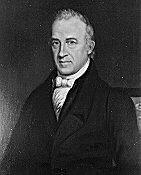
Arthur Livermore (July 29, 1766 – July 1, 1853) was an American politician, jurist, and attorney who served as a United States representative from New Hampshire. He was born in Londonderry, in the Province of New Hampshire, on July 29, 1766, into a family that would become prominent in the legal and political life of the state. He was the son of Samuel Livermore, a distinguished lawyer and statesman who served as a member of the Continental Congress, a United States senator, and chief justice of the New Hampshire Supreme Court. Growing up in this environment, Arthur Livermore was exposed early to legal practice and public affairs, influences that shaped his own professional and political trajectory.
Livermore pursued classical studies in his youth and studied law under the guidance of his father. After completing his legal training, he was admitted to the bar and began the practice of law in New Hampshire. He established himself professionally in the late eighteenth century, at a time when the new nation was defining its legal and constitutional framework. His early legal career coincided with the formative years of the federal republic, and his work as an attorney laid the foundation for his later judicial and legislative service.
In addition to his legal practice, Livermore entered public service at the state level. He served as an associate justice of the New Hampshire Supreme Court, participating in the development and interpretation of state law. His judicial responsibilities reflected both his legal expertise and the influence of his family’s longstanding involvement in the judiciary. Through this role he gained experience in adjudicating disputes and interpreting statutes, experience that would inform his later work as a legislator.
As a member of the Republican Party representing New Hampshire, Arthur Livermore contributed to the legislative process during three terms in office as a United States representative. He was elected as a Democratic-Republican to the Twelfth and Thirteenth Congresses, serving from March 4, 1811, to March 3, 1815, during the administration of President James Madison and the period of the War of 1812. After a break in service, he returned to the House of Representatives in the Eighteenth Congress, serving from March 4, 1823, to March 3, 1825. His service in Congress occurred during a significant period in American history, as the young republic confronted issues of war and peace, national expansion, and the evolving balance between federal and state authority. In these roles, he participated in the democratic process and represented the interests of his New Hampshire constituents in national deliberations.
During his time in Congress, Livermore was identified with the principles of the Republican Party of his era, commonly known as the Democratic-Republican Party, which generally favored limited federal government, agrarian interests, and a strict interpretation of the Constitution. Serving in the House during the War of 1812 and its aftermath, he took part in debates over military policy, finance, and the nation’s posture toward Great Britain and other foreign powers. His later term in the 1820s placed him in the midst of the “Era of Good Feelings,” when partisan lines were shifting and new political alignments were emerging, and he contributed to legislative discussions on economic development and internal improvements that were central to national policy at the time.
After concluding his congressional service, Livermore returned to New Hampshire and resumed his legal and civic activities. He continued to be regarded as a respected figure in the state’s legal and political circles, drawing on decades of experience as an attorney, judge, and legislator. His long life spanned from the colonial period through the early decades of the United States, and his career reflected the transition from provincial governance under British rule to independent state and federal institutions.
Arthur Livermore died in Campton, New Hampshire, on July 1, 1853. He was interred in Blair Cemetery in that community. His life and career, encompassing service in the judiciary and three terms in the United States House of Representatives, placed him among the notable New Hampshire public figures who helped shape the legal and political institutions of the early republic.
Congressional Record