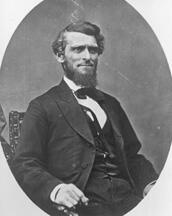
Arthur Inghram Boreman (also spelled Arthur Ingram Boreman) (July 24, 1823 – April 19, 1896) was an American lawyer, politician, and judge who helped found the U.S. state of West Virginia and became its first governor. A member of the Republican Party, he later served one term as a United States Senator from West Virginia from 1869 to 1875, contributing to the legislative process during a significant period in American history and representing the interests of his constituents during Reconstruction.
Boreman was born on July 24, 1823, in Waynesburg, Greene County, Pennsylvania, the son of Kenner Seaton Boreham and Sarah (Ingram) Boreham. His mother’s brother, Arthur B. Ingram, served in the Virginia House of Delegates and later in the legislature of the Wisconsin Territory, providing a family example of public service. When Arthur was four years old, his family relocated to Middlebourne in Tyler County, then part of Virginia and now within West Virginia. Raised in Tyler County, he grew up in what would become the northwestern region of the new state, an area with strong Unionist sentiment on the eve of the Civil War.
Boreman read law under the guidance of an elder brother and the prominent lawyer James McNeil Stephenson. He was admitted to the Virginia bar in 1845 and the following year moved to Parkersburg in Wood County, which became his long-term home and professional base. Establishing a law practice there, he quickly entered public life. Wood County voters elected him as one of their representatives in the Virginia House of Delegates, where he served in this part-time legislative position from 1855 until 1861, winning re-election several times. Although not an abolitionist, he was a firm Unionist and worked unsuccessfully to prevent Virginia’s secession from the Union in April 1861.
With the outbreak of the Civil War, Boreman emerged as a leading Unionist in northwestern Virginia. On June 4, 1861, a meeting of Wood County Unionists elected him, along with Dr. John Moss and Peter G. Van Winkle, as delegates to the Second Wheeling Convention. At that convention, fellow delegates chose Boreman as President. The Second Wheeling Convention established the Restored Government of Virginia, a Unionist government recognized by the federal authorities, which in turn paved the way for the creation of the separate State of West Virginia in 1863. His family was also deeply involved in public affairs: his elder brother William I. Boreman (1816–1892) represented Doddridge and Tyler Counties in the Wheeling conventions, and his youngest brother Jacob S. Boreman (1831–1913) served in the Union Army before moving to Utah, where he became a judge and later a justice of the Utah Territory Supreme Court.
In 1863, after West Virginia was admitted to the Union, voters elected Arthur Boreman as the new state’s first governor. He served three consecutive two-year terms from 1863 to 1869, winning re-election in 1864 and 1866, even though Virginia’s constitutions had previously forbidden such successive terms for governors. As governor during the Civil War and early Reconstruction, he oversaw the organization of the new state government, supported Union military efforts, and dealt with the political and social challenges of wartime and postwar reconstruction in a border region. On November 30, 1864, during his gubernatorial tenure, he married Laurane Tanner Bullock, the widow of a Union soldier, who had two sons from her first marriage; the couple later had two daughters together.
At the close of his third gubernatorial term, Boreman was elected by the West Virginia legislature to the United States Senate to succeed his former Wheeling Convention colleague Peter G. Van Winkle. A Republican, he served as a Senator from West Virginia from March 4, 1869, to March 3, 1875, during a critical phase of Reconstruction. In the Senate he participated actively in the democratic process and contributed to national legislation, including efforts to secure civil and political rights for formerly enslaved people. He helped lead efforts to pass the Fifteenth Amendment to the United States Constitution, which was ratified in 1870 and prohibited denying the right to vote on the basis of race, color, or previous condition of servitude. After completing his single term in the Senate, and as Democrats regained political power in West Virginia, Boreman did not return to Congress but resumed his legal practice in Parkersburg.
In his later career, Boreman remained a prominent figure in West Virginia’s legal and civic life. He returned to the bench and, in 1888, was elected judge of the Fifth Judicial Circuit of West Virginia. He took the bench in 1889 and served as a circuit judge for seven years, continuing in that role until his death. During this period he also engaged in public-spirited activities, including helping to organize recovery efforts following the devastating Ohio River floods of 1884, which affected communities along the river, including Parkersburg. His judicial service in the circuit court bookended his earlier political career, reflecting his long-standing commitment to law and public order in the state he had helped to create.
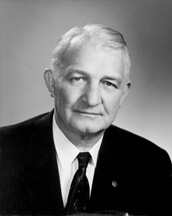
Arthur Inghram Boreman died in Parkersburg, West Virginia, on April 19, 1896, reportedly exhausted after a late trip home from Elizabeth, the seat of Wirt County, where he had been attending to judicial duties. He was survived by his wife, Laurane, two stepsons, and a daughter. Funeral services were held at his home and at the Methodist Episcopal Church in Parkersburg, where he had long served as a lay leader, and he was buried in the Odd Fellows Cemetery in that city. His extended family continued his tradition of public service: in addition to his brother Jacob S. Boreman’s judicial career in Utah, his nephew Herbert Stephenson Boreman (1897–1982) later served as a judge on the United States Court of Appeals for the Fourth Circuit. Boreman’s legacy is commemorated in several ways: the town of Boreman, West Virginia, is named for his family; Boreman Hall, a dormitory at West Virginia University, bears his name; Arthur I. Boreman Elementary School in Middlebourne honors him; and two former elementary schools in Cross Lanes and near Parkersburg were also named for him. The West Virginia and Regional History Center at West Virginia University preserves his papers in collections A&M 104 and A&M 639, documenting the life and career of the first governor and one-term United States Senator from West Virginia.
Congressional Record