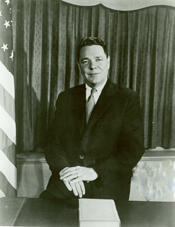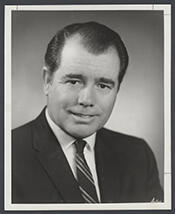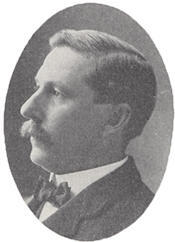
Arsène Paulin Pujo (December 16, 1861 – December 31, 1939) was an American lawyer and Democratic politician who represented Louisiana in the United States House of Representatives from 1903 to 1913. Born in the years immediately preceding the Civil War, he came of age during Reconstruction in the American South, a period that shaped the political and economic environment in which he would later practice law and enter public life. Although detailed records of his early childhood and family background are limited in the available sources, his later prominence in Louisiana politics and in Congress reflects a trajectory rooted in the legal profession and in the Democratic Party’s resurgence in the post-Reconstruction South.
Pujo pursued a legal education and was admitted to the bar, establishing himself as an attorney before seeking elective office. His training and experience as a lawyer provided the foundation for his later legislative work, particularly in areas involving complex financial and regulatory questions. Practicing law in Louisiana at the turn of the twentieth century, he became involved in public affairs at a time when the state, like much of the nation, was grappling with rapid industrialization, the growth of large corporate combinations, and debates over the appropriate role of government in regulating economic power.
Elected as a Democrat to the United States House of Representatives, Pujo entered Congress at the beginning of the Fifty-eighth Congress and served continuously for five terms, from March 4, 1903, to March 3, 1913. During this decade in the House, he represented the interests of his Louisiana constituents while participating in national debates during a significant period in American history marked by the Progressive Era’s reform movements. As a member of the House of Representatives, he contributed to the legislative process on a wide range of issues, aligning with the Democratic Party’s positions of the time and engaging in the democratic process on behalf of his district.
Pujo is best known nationally for his role as chairman of the special House committee that came to bear his name, the “Pujo Committee.” Established in the early 1910s, this committee was charged with investigating the so‑called “money trust,” a term used to describe the concentration of financial power in the hands of a small number of Wall Street bankers and large financial institutions. Under his leadership, the Pujo Committee sought to expose an anticompetitive conspiracy among some of the nation’s most powerful financial interests, examining the structure and practices of trusts and interlocking directorates that appeared to dominate credit and capital markets. The committee’s hearings and findings helped illuminate the extent of financial concentration and contributed to the broader Progressive Era push for banking and antitrust reforms.
Pujo’s congressional service thus coincided with and helped shape a critical phase in the federal government’s response to corporate and financial consolidation. While he continued to represent Louisiana’s local and regional concerns, his work on the Pujo Committee placed him at the center of a national effort to scrutinize and regulate the financial sector. The committee’s investigations informed subsequent legislative initiatives aimed at curbing the power of large trusts and improving oversight of the banking system, and they secured Pujo a lasting place in the history of congressional investigations.
After leaving Congress at the close of his fifth term in 1913, Pujo returned to private life and the practice of law. Although he no longer held federal office, his reputation as a careful legislator and investigator endured, particularly in connection with the reforms that followed the Pujo Committee’s work. He remained identified with the Democratic Party and with the generation of lawmakers who had advanced Progressive Era regulatory measures.
Arsène Paulin Pujo died on December 31, 1939, closing a life that spanned from the Civil War era through the Great Depression and the New Deal. Remembered primarily for his decade of service in the House of Representatives and for chairing the Pujo Committee, he occupies a notable place in the history of congressional oversight of the financial system and in the broader narrative of early twentieth‑century efforts to address the power of trusts and concentrated economic interests in the United States.
Congressional Record