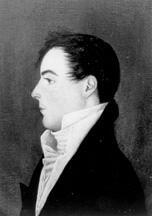
Armistead Thomson Mason (August 4, 1787 – February 6, 1819) was a United States Senator from Virginia and a member of the Republican Party who served one term in the Senate during a formative period in the early republic. Born into a prominent Virginia political family, he was the son of Stevens Thomson Mason, who himself had served as a U.S. Senator from Virginia. Through his father, Armistead Mason was also a grandson of George Mason’s brother, placing him within the extended Mason family that played a significant role in Virginia’s political and social life in the late eighteenth and early nineteenth centuries.
Raised in Virginia, Mason grew up in an environment steeped in public affairs and legal and political discourse. His family’s status afforded him access to a classical education typical of the Virginia gentry of his era, emphasizing literature, history, and the law. Although specific details of his formal schooling are sparse, his subsequent legal and political career indicates that he received substantial training in the law and in public speaking, preparing him for the responsibilities of leadership in state and national politics.
Before entering the United States Senate, Mason pursued a career in law and public service in Virginia. As a young attorney and landowner, he became active in local and state affairs, aligning himself with the dominant Jeffersonian Republican (often called Democratic-Republican) Party in Virginia. His political views reflected the prevailing Republican emphasis on states’ rights, limited federal power, and support for agrarian interests. His family connections, legal background, and party loyalty helped position him for higher office at an unusually young age.
Mason’s congressional service came at a significant moment in American history, in the immediate aftermath of the War of 1812 and during the early stages of what would later be called the “Era of Good Feelings.” He served as a Senator from Virginia in the United States Congress from 1815 to 1817, with his formal tenure in the U.S. Senate recorded from 1816 to 1817. During this single term in office, he contributed to the legislative process as a member of the Republican Party, participating in debates over postwar policy, national defense, and the economic and political consolidation of the young nation. As a member of the Senate, he took part in the democratic process and represented the interests of his Virginia constituents at a time when questions of federal authority, westward expansion, and economic recovery were central to national politics.
Armistead Thomson Mason is particularly notable for his age at the time of his service. He was the second-youngest person ever to serve in the United States Senate, taking his seat at the age of 28 years and 5 months, despite the U.S. Constitution’s formal age requirement of 30 years for senators. His election and seating at such a young age underscored both the influence of his family and the flexibility with which constitutional qualifications were sometimes applied in the early republic. His youth distinguished him among his colleagues and has remained a point of historical interest in studies of congressional membership and eligibility.
Mason’s career was cut short by his early death on February 6, 1819, in Virginia. He died at the age of 31, only a few years after leaving the Senate, bringing an abrupt end to what had been a promising trajectory in national politics. His passing occurred in the same year that another member of his extended family, Stevens Thomson Mason (1819–June 14, 1847), was born; this younger relative would later become a notable political figure in his own right. Although Armistead Thomson Mason’s time in public life was brief, his service in the Senate during a critical transitional period in American history, his role as a representative of Virginia’s Republican political tradition, and his distinction as one of the youngest senators in U.S. history have secured him a place in the historical record of the early United States Congress.
Congressional Record