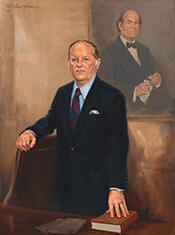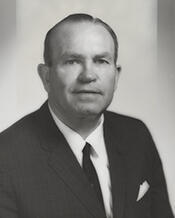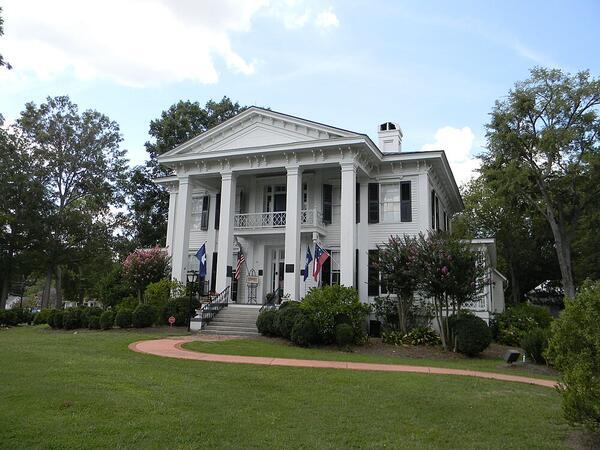
Armistead Burt (November 13, 1802 – October 30, 1883) was a planter, slaveholder, lawyer, and U.S. Representative from South Carolina who served five consecutive terms in Congress in the mid-nineteenth century. He was born at Clouds Creek, near Edgefield, in Edgefield County, South Carolina, and in his youth moved with his parents to Pendleton, South Carolina. He came from a family that would later be connected to the Civil War; one of his brothers was Erasmus Burt, who became a Confederate officer and was mortally wounded at the Battle of Ball’s Bluff in 1861.
Burt completed preparatory studies in South Carolina before turning to the law. He studied law in Pendleton and was admitted to the bar in 1823. Soon after his admission, he commenced the practice of law in Pendleton, building a professional footing in the legal community of the upcountry region. In 1828 he relocated to Abbeville, South Carolina, where he continued his legal practice. In addition to his work as an attorney, Burt became a planter and slaveholder, engaging in agricultural pursuits that tied him to the plantation economy and social structure of antebellum South Carolina.
Burt’s public career began in state politics. He served as a member of the South Carolina House of Representatives from 1834 to 1835 and again from 1838 to 1841, representing his constituency during a period marked by growing sectional tensions and debates over states’ rights and federal authority. His legislative service at the state level helped establish his reputation as a Democratic politician and prepared him for national office.
In 1843 Burt was elected as a Democrat to the Twenty-eighth Congress and was subsequently reelected to the Twenty-ninth, Thirtieth, Thirty-first, and Thirty-second Congresses, serving from March 4, 1843, to March 3, 1853. During his decade in the U.S. House of Representatives, he represented South Carolina at a time when issues such as the annexation of Texas, the Mexican–American War, and the Compromise of 1850 dominated national politics. Burt rose to positions of influence within the House, reflecting both his seniority and his party’s confidence in his leadership.
Burt held several important posts during his congressional service. He served as chairman of the Committee on Military Affairs in the Thirty-first and Thirty-second Congresses, placing him at the center of legislative oversight of the Army and military policy in the years immediately following the Mexican–American War. In 1848 he was chosen Speaker pro tempore of the House of Representatives during the absence of Speaker Robert C. Winthrop, presiding over the House and managing its proceedings, a role that underscored his standing among his colleagues. After five terms, he was not a candidate for renomination in 1852 and left Congress at the close of his final term in March 1853.
Following his departure from national office, Burt returned to Abbeville and resumed the practice of law, continuing his professional and agricultural activities in the community where he had long resided. Remaining aligned with the Democratic Party, he stayed engaged in political affairs and served as a delegate to the Democratic National Convention in 1868, participating in the party’s deliberations during the turbulent Reconstruction era. His later years were spent in South Carolina, where he witnessed the profound transformations brought by the Civil War and its aftermath.
Armistead Burt died on October 30, 1883. He was interred in the Episcopal Cemetery in Abbeville, South Carolina, closing a life that had spanned from the early national period through Reconstruction and that had included significant service at both the state and federal levels.
Congressional Record