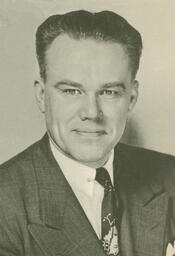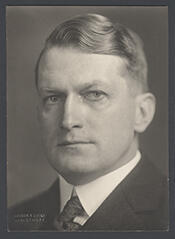
Archibald Ernest Olpp (May 12, 1882 – July 26, 1949) was an American physician and politician who served a single term as a Republican Representative from New Jersey in the United States Congress from 1921 to 1923. He was the first Republican to be elected to Congress from New Jersey’s 11th congressional district after its creation in 1913, and he contributed to the legislative process during this one term in office, representing the interests of his constituents during a significant period in American history.
Olpp was born in South Bethlehem, Pennsylvania, on May 12, 1882. He attended the local public schools and continued his education at the Moravian School in Bethlehem, from which he graduated in 1899. He then enrolled at Lehigh University, also in Bethlehem, earning his degree in 1903. Pursuing a career in medicine, he entered the medical department of the University of Pennsylvania in Philadelphia and completed his medical studies there in 1908, receiving the professional training that would underpin both his medical and public service careers.
Immediately after his graduation from Lehigh University, Olpp remained in academia as an instructor. He taught chemistry at Lehigh University from 1903 to 1904, gaining early experience in scientific education. Following completion of his medical degree, he served as an instructor in biological chemistry at the Columbia University College of Physicians and Surgeons in New York City from 1908 to 1909. These appointments reflected his grounding in both the theoretical and practical aspects of science and medicine at a time when medical education and research were undergoing significant modernization in the United States.
Olpp began the practice of medicine in West Hoboken, New Jersey, in 1909, marking the start of a long medical career in the state. He quickly became involved in local public health and municipal service. From 1912 to 1914 he served as town physician, providing medical care and advice to local authorities and residents. He later became police surgeon and physician to the public schools in Secaucus, New Jersey, positions he held from 1916 to 1924. In these roles he was responsible for the health and welfare of both law enforcement personnel and schoolchildren, integrating medical practice with civic responsibility.
During the World War I era, Olpp served as a first lieutenant in the United States Medical Corps. His military service, though not on the front lines, placed him within the broader national mobilization for the war effort and drew upon his medical expertise to support the health needs of service members. This combination of medical, academic, municipal, and military experience helped shape his public profile and laid the groundwork for his entry into electoral politics.
Olpp was elected as a Republican to the Sixty-seventh Congress, representing New Jersey’s 11th congressional district, and served from March 4, 1921, to March 3, 1923. His election marked the first time a Republican had won that district since its establishment in 1913, underscoring the political significance of his victory. As a member of the House of Representatives, he participated in the democratic process and contributed to national legislative deliberations during the early 1920s, a period marked by postwar adjustment and economic and social change. He sought reelection in 1922 but was unsuccessful, bringing his congressional service to a close after one term.
Following his departure from Congress, Olpp resumed his medical career in New Jersey, continuing the professional path that had preceded his time in Washington. He remained active in local affairs and maintained his residence in Cliffside Park, New Jersey. On July 26, 1949, at the age of 67, he collapsed in front of a building in Hasbrouck Heights, New Jersey, and was taken to Hackensack Hospital, where he died the same day. Archibald Ernest Olpp was interred in Brookside Cemetery in Englewood, New Jersey, closing a life that combined medical practice, military service, and a brief but notable tenure in the United States Congress.
Congressional Record