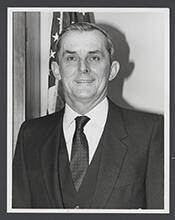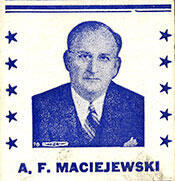
Anton Frank Maciejewski (January 3, 1893 – September 25, 1949) was an American businessman and Democratic politician who served as a U.S. Representative from Illinois from 1939 to 1943. His tenure in Congress, spanning two terms, coincided with a critical period in American history on the eve of and during the early years of the Second World War, during which he participated in the legislative process and represented the interests of his Illinois constituents.
Maciejewski was born on January 3, 1893, in Anderson, Texas. During his youth, he moved to Illinois, where he attended the public schools of Cicero. He later pursued further education at the Lewis Institute in Chicago, an institution that provided technical and professional training and would later become part of the Illinois Institute of Technology. This combination of public schooling and technical education prepared him for a career that blended business, local administration, and politics.
By 1916, Maciejewski had become engaged in the wholesale and retail coal business in Cicero, Illinois. His work in the coal industry placed him in the midst of a vital sector of the regional economy at a time when coal was a primary source of fuel for homes, industry, and transportation. His business activities established him as a local figure in Cicero and provided the practical experience that would inform his later public service.
Maciejewski’s entry into public administration began in the 1920s. From 1925 to 1928, he served as assistant agent in charge of relief of Cook County, Illinois, a position that involved administering assistance programs in one of the nation’s largest urban counties during a period of economic fluctuation preceding the Great Depression. He also became active in party politics, serving as a member of the Democratic State and National Committees. In 1928 he was a delegate to the Democratic National Convention, reflecting his growing prominence within the Democratic Party. At the local level, he served as supervisor and treasurer of Cicero, Illinois, from 1932 to 1939, overseeing municipal finances and local governance during the depths of the Great Depression.
Building on his local and party experience, Maciejewski was elected as a Democrat to the Seventy-sixth and Seventy-seventh Congresses. He served in the U.S. House of Representatives from January 3, 1939, until his resignation on December 8, 1942. His service is generally recorded as extending from 1939 to 1943, encompassing two full terms. During this time, he took part in the deliberations of a Congress that addressed late New Deal legislation and the nation’s transition from peacetime to wartime footing following the outbreak of World War II. A member of the Democratic Party, he contributed to the legislative process and participated in the democratic governance of the country at a moment of significant national and international challenge. He was not a candidate for renomination in 1942.
After leaving Congress, Maciejewski returned to private enterprise, resuming his involvement in the wholesale and retail coal business. In addition to his coal interests, he engaged in the construction of defense housing, contributing to the wartime effort on the home front by helping to provide accommodations for workers and others connected with defense industries during World War II.
Maciejewski continued his public service at the regional level following his congressional career. In December 1942, he was elected to the board of trustees of the sanitary district of Chicago, an important body responsible for wastewater management and public health infrastructure in the Chicago metropolitan area. He served on this board from his election in 1942 until his death. Anton Frank Maciejewski died in Chicago, Illinois, on September 25, 1949. He was interred in Resurrection Cemetery in Justice, Illinois, closing a career that combined business leadership, local and national political activity, and long-standing service to the people of Illinois.
Congressional Record