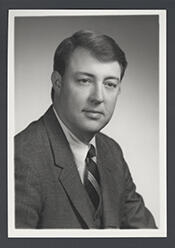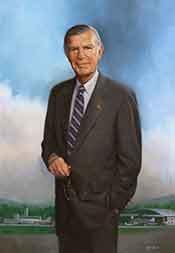
Anthony Cavalcante (February 6, 1897 – October 29, 1966) was a Democratic member of the United States House of Representatives from Pennsylvania and a longtime labor attorney and state legislator. He represented a western Pennsylvania district in the 81st Congress after a career in state politics and legal advocacy centered in Fayette County.
Cavalcante was born in Vanderbilt, Fayette County, Pennsylvania, on February 6, 1897. He grew up in the coal and industrial region of southwestern Pennsylvania, an area whose economic and social conditions would later shape his legal and political focus, particularly his work with organized labor and local government bodies. His early life in this working-class environment provided him with firsthand familiarity with the concerns of miners and industrial workers that would inform his public service.
During World War I, Cavalcante served overseas with Company D, 110th Infantry Regiment, 28th Division of the United States Army. His active duty extended from May 3, 1918, to May 6, 1919, during which he saw combat in the European theater. For wounds received in action, he was awarded the Purple Heart, reflecting his direct participation in frontline service and the personal sacrifices associated with his military duty.
After returning from the war, Cavalcante pursued higher education. He attended Bucknell University in Lewisburg, Pennsylvania, in 1920 and 1921, and continued his studies at Pennsylvania State College (now Pennsylvania State University) in 1921. He then undertook legal studies at the law school of Dickinson College in Carlisle, Pennsylvania, from which he graduated in 1924. His legal training prepared him for a career that combined private practice, public office, and representation of labor and local governmental interests.
Cavalcante entered public life as a Democrat and was elected to the Pennsylvania State Senate, where he served from 1935 to 1943. His tenure in the state legislature coincided with the New Deal era, a period of expanding government involvement in labor relations and social welfare, and he represented a constituency heavily influenced by coal mining and related industries. Alongside his legislative work, he developed a substantial legal practice. He served as chief counsel for United Mine Workers of America, District Four, a significant coal-mining district in southwestern Pennsylvania, and also acted as counsel for the German Township School District, the German Township Road Supervisors, and the South Union Township Road Supervisors. In these roles he was closely involved with issues of labor rights, local governance, and public infrastructure.
Building on his state-level experience, Cavalcante sought national office and was elected as a Democrat to the 81st Congress in the 1948 elections. In that contest he defeated incumbent Republican Representative William J. Crow, reflecting the postwar political shifts in his district. He served one term in the U.S. House of Representatives, from January 3, 1949, to January 3, 1951, participating in the legislative work of the early Cold War period and the domestic adjustments following World War II. In the 1950 election he was an unsuccessful candidate for reelection, losing to Republican Edward L. Sittler, which ended his brief tenure in Congress.
Following his service in the House of Representatives, Cavalcante returned to the practice of law in Pennsylvania. He continued to reside and work in the Uniontown area, maintaining his professional involvement in legal matters affecting local governments and labor organizations. He remained a figure associated with the Democratic Party and the legal and political life of Fayette County until his death. Anthony Cavalcante died in Uniontown, Pennsylvania, on October 29, 1966, at the age of 69.
Congressional Record