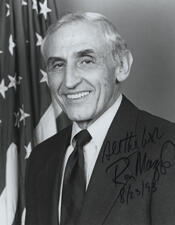
Andrew Alkire Trumbo (September 15, 1797 – August 21, 1871) was a United States Representative from Kentucky. He was born in Bath County, Kentucky, where he attended the common schools available in the rural frontier environment of the early nineteenth century. As a young man, he entered public service at the local level, being employed in the county clerk’s office, an experience that introduced him to legal procedure, land records, and the administrative workings of county government.
While working in the clerk’s office, Trumbo studied law, following the customary practice of “reading law” under the guidance of established attorneys rather than attending a formal law school, which was then uncommon in Kentucky. After completing his legal studies, he was admitted to the bar and commenced the practice of law in Owingsville, the county seat of Bath County, in 1824. His growing reputation as a lawyer and local official led to further responsibilities, and by 1830 he was serving simultaneously as clerk and as the Commonwealth’s attorney for Bath County, combining administrative duties with the role of public prosecutor on behalf of the state.
Trumbo’s legal and local governmental experience provided the foundation for his entry into national politics. Aligning himself with the Whig Party, which was then a major force in Kentucky and nationally, he was elected as a Whig to the Twenty-ninth Congress and served a single term in the U.S. House of Representatives from March 4, 1845, to March 3, 1847. His tenure in Congress coincided with a period of intense national debate over territorial expansion and the Mexican–American War, during which Kentucky Whigs were generally associated with a cautious approach to expansion and a focus on internal improvements and economic development, although specific details of Trumbo’s individual legislative positions are not extensively documented.
After leaving Congress at the conclusion of his term in 1847, Trumbo remained active in political affairs. Reflecting the fluid party alignments of the era and the shifting political landscape in Kentucky, he served as a presidential elector on the Democratic ticket in 1848. This role marked a notable transition from his earlier Whig affiliation and illustrated the broader realignments taking place in the years leading up to the sectional crises of the 1850s.
Following his service as a presidential elector, Trumbo resumed the practice of law. He later moved from Bath County to Franklin County, Kentucky, where the state capital, Frankfort, is located, and continued his legal career there. He spent his later years in Frankfort, remaining identified with the legal profession and with the public life of his state, though he did not return to Congress.
Andrew Alkire Trumbo died in Frankfort, Kentucky, on August 21, 1871. Although he died in the state capital, he was returned to his longtime home community for burial and was interred in the City Cemetery in Owingsville, Kentucky, underscoring his enduring connection to Bath County, where his public and professional life had begun.
Congressional Record