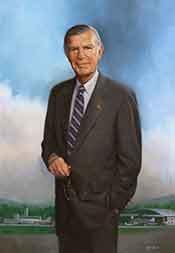
Andrew Stewart (1791–1872) was an American lawyer, landowner, and politician who served as a U.S. Representative from Pennsylvania and was a prominent member of the Whig Party. Over the course of nine terms in the House of Representatives, he contributed to the legislative process during a significant period in American history, participating in the democratic process and representing the interests of his Pennsylvania constituents.
Andrew Stewart was born in 1791 in Uniontown, Fayette County, Pennsylvania. He grew up in the early years of the American republic, in a region that was developing rapidly in agriculture, trade, and industry. Little is recorded in standard references about his parents or early family life, but his subsequent professional and political career indicates that he received a sound education for the period and was able to enter the learned profession of law, a common pathway into public life in the early nineteenth century.
Stewart pursued legal studies in Pennsylvania and was admitted to the bar, establishing himself as a practicing attorney. In addition to his legal work, he became involved in land and business interests, reflecting the broader economic expansion of western Pennsylvania in the first half of the nineteenth century. His standing as a lawyer and landowner, combined with his engagement in local affairs, helped launch his political career at a time when the region was gaining influence in state and national politics.
Stewart’s national prominence came through his long service in the U.S. House of Representatives as a member of the Whig Party representing Pennsylvania. He was first elected to Congress as a Democratic-Republican and later aligned with the Adams and Anti-Jackson factions before becoming a Whig, reflecting the fluid party realignments of the era. Across nine terms in office, he served nonconsecutively between the 1820s and the 1840s, participating in debates over internal improvements, tariffs, and economic policy that were central to the Whig program. As a representative, he worked to advance the interests of his constituents in Pennsylvania, a state deeply affected by questions of transportation infrastructure, manufacturing, and trade.
During his congressional service, Stewart sat in the House during administrations from James Monroe through James K. Polk, a period marked by the Missouri Compromise, the rise of Jacksonian democracy, and the intensifying sectional disputes that would eventually lead to the Civil War. Within this shifting political landscape, he was identified with the Whig emphasis on congressional authority, economic development, and support for protective tariffs. His repeated returns to office over nine terms attest to the confidence his district placed in his representation and legislative efforts.
After leaving Congress, Stewart returned to his legal and business pursuits in Pennsylvania. He remained a respected figure in his community, his long tenure in the House marking him as one of the more experienced legislators from his region in the antebellum period. His later years were spent in the state whose interests he had long represented in Washington, as the nation moved through the Civil War and into Reconstruction.
Andrew Stewart died in 1872, closing a life that spanned from the early national period through the reunification of the country after the Civil War. As a member of the Whig Party representing Pennsylvania, his nine terms in Congress placed him at the center of many of the major political and economic debates of his time, and he is remembered in the congressional record for his sustained contribution to the legislative process and to the representation of his Pennsylvania constituents.
Congressional Record