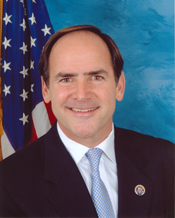
Andrew Ewing (June 17, 1813 – June 16, 1864) was an American politician and a member of the United States House of Representatives for the 8th congressional district of Tennessee. A Democrat, he served one term in Congress during a turbulent era in American history, participating in the national legislative process and representing the interests of his Tennessee constituents.
Ewing was born on June 17, 1813. Little is recorded in standard reference works about his early life or family background, but his subsequent career in public life indicates that he received sufficient education and training to enter the legal and political professions, as was common for aspiring officeholders of his generation. Growing up in the early nineteenth century South, he came of age in a period marked by rapid territorial expansion, intensifying sectional debates, and the consolidation of party politics under the Democratic and Whig banners.
Details of Ewing’s formal education are not extensively documented in surviving biographical sources. However, like many contemporaries who later entered Congress, he likely pursued legal studies, either through formal schooling or apprenticeship, to prepare for professional and public service. His emergence as a Democratic officeholder from Tennessee suggests that he became integrated into the state’s legal and political circles, where questions of federal power, states’ rights, and the expansion of slavery were central to public debate.
By the time Ewing entered national office, he was aligned with the Democratic Party, which dominated much of Tennessee’s political landscape in the antebellum period. As a member of the Democratic Party representing Tennessee, Andrew Ewing contributed to the legislative process during one term in office. He was elected to the United States House of Representatives as the representative for Tennessee’s 8th congressional district, a constituency in the western part of the state that was closely tied to the agrarian economy and the broader political currents of the South. His service in Congress occurred during a significant period in American history, as the nation grappled with sectional tensions, debates over territorial acquisition, and the balance of power between free and slave states.
During his single term in the House of Representatives, Ewing participated in the democratic process at the federal level, engaging in the consideration of legislation and national policy. As a Democratic representative from Tennessee, he would have been involved in issues central to his district, including agriculture, trade, and the evolving national disputes that increasingly divided North and South. Although the detailed record of his committee assignments and specific legislative initiatives is sparse in standard references, his tenure placed him among those southern Democrats who navigated the complex political environment of the pre–Civil War era.
After completing his one term in Congress, Ewing left the House and returned to private life and professional pursuits. Like many former members of Congress in the mid-nineteenth century, he likely resumed legal or related work while maintaining his connections to Tennessee’s political and civic affairs. His post-congressional years unfolded against the backdrop of mounting sectional conflict that would culminate in the Civil War, a conflict that deeply affected Tennessee and the broader region he had represented.
Andrew Ewing died on June 16, 1864, one day short of his fifty-first birthday. His death came in the midst of the Civil War, a national crisis that reshaped the Union he had served as a member of the House of Representatives. Ewing’s career, though limited to a single congressional term, reflected the experience of many antebellum southern Democrats who participated in the federal government during a formative and increasingly divisive period in United States history.
Congressional Record