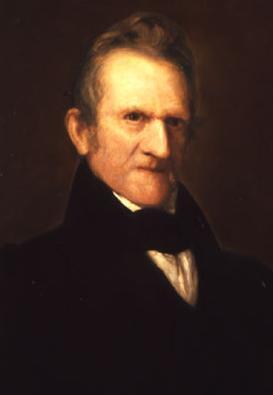
Ambrose Spencer (December 13, 1765 – March 13, 1848) was an American lawyer, jurist, and politician who served in the New York State Legislature, as New York State Attorney General, as chief justice of the New York Supreme Court, as mayor of Albany, and as a member of the United States House of Representatives. As a member of the Unknown Party representing New York, Ambrose Spencer contributed to the legislative process during one term in Congress, participating in the democratic process and representing the interests of his constituents during a significant period in American history.
Spencer was born on December 13, 1765, in Salisbury, in the Connecticut Colony. He was the son of Philip Spencer and Mary (née Moore) Spencer, and his brother was Philip Spencer. He was also a distant cousin of James B. Spencer (1781–1848), who later served as a U.S. Representative. Spencer attended Yale College from 1779 to 1782 and subsequently graduated from Harvard University in 1783. After completing his formal education, he read law with John Canfield at Sharon, Connecticut, with John Bay at Claverack, New York, and with Ezekiel Gilbert at Hudson, New York, thereby receiving a broad legal training under several prominent practitioners.
After his admission to the bar, Spencer commenced the practice of law in Hudson, New York. He served as city clerk of Hudson from 1786 until 1793, marking his entry into public service. He was elected to the New York State Assembly, serving from 1793 to 1795, and then to the New York State Senate, in which he served from 1795 to 1804. Concurrently, from 1796 to 1801 he held the post of Assistant Attorney General for the Third District of New York, comprising Columbia and Rensselaer counties. His rising stature in state legal affairs led to his appointment as New York Attorney General, a position he held from 1802 to 1804.
Spencer’s judicial career began in 1804, when he was appointed an associate justice of the New York Supreme Court. He served in that capacity until 1819, when he became chief justice of the court, a position he held until the end of 1822. His tenure on the bench was brought to a close when he was legislated out of office by the New York State Constitution of 1821. Governor Joseph C. Yates nominated him for reappointment, but the Bucktails majority in the State Senate rejected the nomination, in part because Spencer had long been a leading figure among the Clintonians in New York politics. During these years he also played a role in state and national politics as a presidential elector in 1808 and as a delegate to the New York State Constitutional Convention of 1821. On March 8, 1824, he was elected mayor of Albany over John Lansing Jr., taking office on March 10, 1824. He was reelected on January 1, 1825, and served as mayor until January 1, 1826.
In 1825, Spencer was the Clintonian candidate for United States Senator from New York and received a majority in the State Assembly. The Bucktails majority in the State Senate, however, declined to nominate any candidate, thereby preventing an election on joint ballot and leaving the seat vacant until the election of Nathan Sanford in 1826. Following this unsuccessful bid, Spencer resumed the practice of law in Albany. He was later elected to the Twenty-first United States Congress, serving from March 4, 1829, to March 3, 1831, as a member of the Unknown Party representing New York. During his term in the House of Representatives he served on the Committee on Agriculture and was appointed one of the impeachment managers in 1830 to conduct the impeachment proceedings against Judge James H. Peck of the U.S. District Court for the District of Missouri.
In 1839, Spencer moved to Lyons, New York, where he engaged in agricultural pursuits, reflecting a shift from his long legal and political career to a more rural life. He remained active in national politics, however, and presided over the Whig National Convention held in Baltimore, Maryland, in 1844. His prominence in public life was recognized by academic institutions as well: the University of Pennsylvania awarded him the honorary degree of Doctor of Laws (LL.D.) in 1819, and Harvard University conferred the same degree upon him in 1821. The town of Spencer in New York was named in his honor, commemorating his influence in the state.
Spencer married three times, forming connections with several notable New York families. On February 18, 1784, he married Laura Canfield (1768–1807), daughter of his former legal mentor John Canfield (1740–1786) and Dorcas (née Buell) Canfield (1742–1812). They were the parents of several children, including John Canfield Spencer (1788–1855), who later served as U.S. Secretary of War and U.S. Secretary of the Treasury under President John Tyler; Abigail “Abby” Spencer (1790–1839), who married John Townsend, a mayor of Albany; William Augustus Spencer (1792–1854), who married Eleanora Eliza Lorillard (1801–1843), daughter of Peter Abraham Lorillard; Ambrose Spencer Jr. (1795–1814), who served as aide-de-camp to Major General Jacob Jennings Brown during the War of 1812; Theodore Spencer (born 1800), an attorney who became a Presbyterian minister and married Catharine Vosburgh, daughter of Myndert T. Vosburgh; and Laura Isabella Spencer (1803–1825), who married Robert Gilchrist of New York. After Laura Canfield Spencer’s death in 1807, he married Mary Clinton (1773–1808) in 1808, daughter of General James Clinton and sister of New York Governor DeWitt Clinton; she had previously been married to Robert Burrage Norton. Following Mary’s early death in 1808, he married her sister Katherine Clinton (1778–1837), who had previously been married to Samuel Lake Norton.
Through his descendants, Spencer remained connected to prominent American families and public figures. His grandson Philip Spencer (1823–1842) was executed for mutiny in 1842 while serving in the U.S. Navy. He was also the grandfather of Lorillard Spencer (1827–1888) and great-grandfather of Lorillard Spencer (1860–1912), who married Caroline Berryman Spencer. He was the great-great-grandfather of Lorillard Spencer (1883–1939), president of Atlantic Aircraft, who married Katherine Emmons Force (1891–1956); both were notable figures in Newport, Rhode Island, society.
Ambrose Spencer died on March 13, 1848, in Lyons, New York. He was buried at Albany Rural Cemetery in Menands, New York, a resting place for many of the state’s leading political and civic figures.
Congressional Record