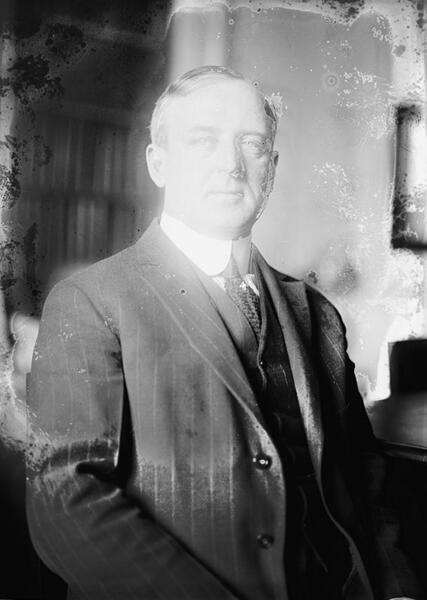
Ambrose Patrick Kennedy (December 1, 1875 – March 10, 1967) was a Republican member of the United States House of Representatives from Rhode Island who served five consecutive terms in Congress from 1913 to 1923. Born on December 1, 1875, he came of age in the late nineteenth century, a period of rapid industrialization and political change in the United States. His early life in Rhode Island placed him in a state with a strong maritime, manufacturing, and immigrant heritage, influences that would later shape his understanding of the needs and concerns of his constituents.
Kennedy’s education prepared him for a career in public life at a time when formal schooling was becoming increasingly important for political leadership. Growing up in Rhode Island, he would have been exposed to the state’s evolving public school system and the civic culture of New England, where participation in local affairs and familiarity with public issues were highly valued. This environment helped foster his interest in government and public service and laid the groundwork for his later involvement in politics and legislative work.
Before entering Congress, Kennedy developed his career in Rhode Island, gaining experience that contributed to his effectiveness as a legislator. As the state’s economy and society changed in the early twentieth century, he became engaged in public affairs and aligned himself with the Republican Party, which was then a dominant force in many parts of New England. His work and reputation at the state and local level helped build the support necessary for a successful bid for national office, positioning him as a credible representative of Rhode Island’s interests in Washington.
Kennedy was elected as a Republican to the United States House of Representatives and served from 1913 to 1923, representing Rhode Island during a decade marked by profound national and international developments. His five terms in office placed him in the 63rd through the 67th Congresses, a period that encompassed the Progressive Era, World War I, and the beginning of the postwar adjustment. As a member of the House of Representatives, Ambrose Kennedy participated in the democratic process and represented the interests of his constituents, contributing to the legislative process during a time when Congress addressed issues such as economic regulation, wartime mobilization, veterans’ affairs, and the changing role of the federal government.
During his congressional service, Kennedy took part in debates and votes on measures that reflected both national priorities and the specific concerns of Rhode Island. Serving in a coastal, industrial state, he would have been attentive to questions affecting manufacturing, trade, labor, and immigration, as well as the broader implications of American involvement in World War I. His decade in Congress coincided with major legislative initiatives related to war finance, military organization, and domestic reforms, and his role as a Republican representative placed him within the party’s evolving response to these challenges.
After leaving Congress in 1923, Kennedy returned to private life while remaining identified with the public service he had rendered over ten years in the House of Representatives. His post-congressional years unfolded against the backdrop of the interwar period, the Great Depression, World War II, and the early Cold War, giving him a long perspective on the transformations that had begun during his time in office. Although no longer in elective federal office, his experience as a former member of Congress and as a long-time Republican figure in Rhode Island continued to mark his standing in the community.
Ambrose Patrick Kennedy lived to an advanced age, witnessing more than half a century of American political and social change after his initial election to Congress. He died on March 10, 1967, closing a life that had spanned from the post–Civil War era into the modern United States. Remembered primarily for his decade of service in the U.S. House of Representatives from Rhode Island from 1913 to 1923, he remains part of the historical record of the state’s congressional delegation and of the broader legislative history of the early twentieth century.
Congressional Record