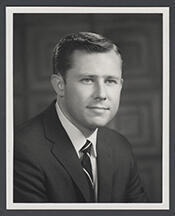
Amasa Learned (November 15, 1750 – May 4, 1825) was an American preacher, lawyer, jurist, and politician from New London, Connecticut, who served in the Connecticut House of Representatives and represented Connecticut in the United States House of Representatives from 1791 until 1795. He was born in Killingly in the Connecticut Colony, the son of Deacon Ebenezer Learned and Keziah (Leavens) Learned. Raised in a religious household, he was prepared for college by a private tutor, reflecting his family’s emphasis on education and public service in the late colonial period.
Learned pursued higher education at Yale College, from which he graduated in 1772. Shortly after completing his studies, he moved into the field of education himself, teaching in the Union School in New London. At the same time, he undertook theological study and, in October 1773, received a license to preach from the Windham Association. He preached for a short period, combining his interests in religion and learning, before gradually shifting his focus toward the law and public affairs. In 1773 he married Grace Hallam; the couple had four children, establishing a family line that would later include his grandson John Law, who served as a United States Representative from Indiana.
While still residing in Killingly, Learned began the study of law in 1778, marking a transition from his early clerical pursuits to a legal and political career. His entry into public life came swiftly: in 1779 he was elected a member of the Connecticut House of Representatives. After relocating to New London, he returned to the lower house of the state legislature, serving again in the Connecticut House of Representatives from 1785 to 1791. During this period he also took part in one of the formative events of the new nation’s political development, serving as a member of the Connecticut convention that ratified the Constitution of the United States in 1788.
In 1791 Learned advanced to higher office within Connecticut’s state government. He was elected to the upper house of assistants, a body that functioned as part of the colony’s and then the state’s upper legislative and advisory structure. At the same time, he served as a judge of the Connecticut Supreme Court of Errors, the state’s highest court, from 1791 to 1792. His judicial service coincided with the early years of the federal republic, when state courts were defining their roles in relation to emerging federal institutions and laws.
Learned’s congressional service began in the context of the first party alignments of the new federal government. He was elected as a Pro-Administration candidate, aligned with the supporters of President George Washington’s administration, to the Second and Third Congresses. Representing Connecticut at large, he served in the United States House of Representatives from March 4, 1791, to March 3, 1795. His tenure in Congress thus encompassed two full terms during a significant period in American history, when the young republic was establishing its financial system, foreign policy posture, and basic legislative precedents. He had earlier been a candidate in a December 1790 special election for another of Connecticut’s at-large congressional districts, finishing as runner-up to Jeremiah Wadsworth. While in Congress, he engaged in land speculations, a common practice among public figures of the era, even as he participated in the legislative process and represented the interests of his Connecticut constituents.
After leaving the national legislature in 1795, Learned remained active in public affairs in Connecticut. His most notable later political role came in 1818, when he served as a delegate to the Connecticut state constitutional convention. That convention produced a new state constitution that replaced the colonial charter and redefined the relationship between church and state, suffrage, and the structure of government in Connecticut, and Learned’s participation reflected his continued engagement with constitutional and institutional questions well into the early nineteenth century.
Amasa Learned spent his later years in New London, where he had long been established as a prominent figure in religious, legal, and political circles. He died there on May 4, 1825. His career, spanning service as a preacher, lawyer, state legislator, judge, and member of Congress, placed him among the generation of Connecticut leaders who helped guide the transition from colony to state and from confederation to a more firmly established federal union.
Congressional Record