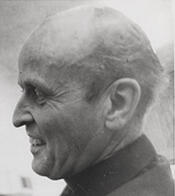
Alvah Crocker (October 14, 1801 – December 26, 1874) was an American manufacturer, railroad promoter, and Republican politician who served in the Massachusetts General Court and as a U.S. representative from Massachusetts. Born in Leominster, Massachusetts, he attended local public schools and later studied at Groton Academy, receiving the basic academic training that prepared him for a career in industry and public life. His early years in a growing New England industrial region exposed him to the emerging paper and textile trades that would shape his professional pursuits.
Crocker began his career in manufacturing in 1820, when he was first employed in a paper mill at Franklin, New Hampshire. Demonstrating early initiative and entrepreneurial ambition, he borrowed money in 1823 to establish his own paper mill at Fitchburg, Massachusetts. As proprietor of paper manufactures there, he steadily expanded his operations until his paper mills became among the largest in the United States. Around these mills he developed extensive machine shops and foundries, contributing to the industrial growth of Fitchburg and the surrounding area. In the course of his work in paper manufacturing, he introduced important innovations: he was the first to use cotton waste in the manufacture of white paper and the first to employ palm leaf fiber in the production of wall papers, reflecting both technical ingenuity and a willingness to experiment with new materials.
Crocker’s success as a manufacturer led naturally into public service and advocacy for improved transportation. He was elected to the Massachusetts legislature in 1835, serving in the Massachusetts General Court, where he strongly advocated for steam communication with Boston to support the economic development of interior communities like Fitchburg. Returning to the legislature in 1842, he secured a charter for a new railroad linking northern Massachusetts with the seaboard. Through his exertions, this railroad was completed in 1845, marking the beginning of his long and influential career as a railroad promoter and executive.
Over the following decades, Crocker became a central figure in New England railroad development. He engaged in the construction and promotion of several key lines, including the Vermont and Massachusetts Railroad, the Troy and Boston Railroad, and the ambitious Hoosac Tunnel project, designed to open a direct rail route through the Hoosac Range. In 1847 and 1848 he lectured extensively in support of the tunnel, helping to build public and political backing for what became one of the most significant engineering undertakings of the era. He served as president of the Fitchburg Railroad, further consolidating his role in regional transportation. His efforts in connection with the Hoosac Tunnel later drew recognition in modern accounts of engineering history; the Science Channel documentary “Driven to Invent: Killer Tunnel” referred to Crocker as “The Father of Modern Tunneling” for his influence in advancing the use of geologists, explosives, pneumatic tools, and improved boring technology, noting that he helped lay down principles for tunnel construction that continued into the modern period.
In addition to his early legislative service, Crocker remained active in state politics during the mid-nineteenth century. During the American Civil War he served for two terms in the Massachusetts State Senate, aligning with the Republican Party during a critical period in national and state affairs. As a Republican representing Massachusetts, he contributed to the legislative process at both the state and federal levels, participating in the democratic governance of a state deeply involved in the Union war effort and in the broader economic transformation of the region.
Crocker’s prominence in business and state politics eventually led to his election to the United States Congress. He was elected as a Republican to the Forty-second Congress to fill the vacancy caused by the resignation of Representative William B. Washburn, who had been elected Governor of Massachusetts. Crocker took his seat in the U.S. House of Representatives on January 2, 1872, representing his Massachusetts constituency during a significant period in American history marked by Reconstruction and continued industrial expansion. He was reelected to the Forty-third Congress, thereby serving two terms in office. During his tenure in Congress, he participated in the legislative process and represented the interests of his constituents, bringing to national deliberations the perspective of a seasoned manufacturer and railroad promoter.
Crocker continued to serve in Congress until his death in office. He died in Fitchburg, Massachusetts, on December 26, 1874, while still a member of the Forty-third Congress, placing him among the members of the United States Congress who died in office in the nineteenth century. He was interred in Laurel Hill Cemetery in Fitchburg. His career left a lasting imprint on the industrial and transportation development of Massachusetts and New England, as well as on the legislative history of the state and the nation.
Congressional Record