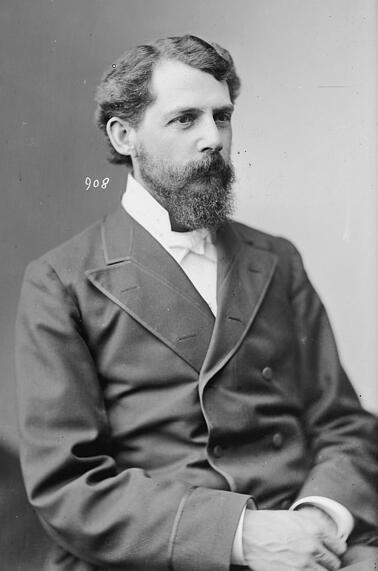
Alvah Augustus Clark (September 13, 1840 – December 27, 1912) was an American lawyer and Democratic Party politician who represented New Jersey’s 4th congressional district in the United States House of Representatives for two terms in the Forty-fifth and Forty-sixth Congresses from 1877 to 1881. A member of the Democratic Party, he contributed to the legislative process during this significant period in American history, participating in the democratic process and representing the interests of his constituents. He was the first cousin of James N. Pidcock, who later represented the same district from 1885 to 1889.
Clark was born on September 13, 1840, in Lebanon Township, New Jersey. He attended both public and private schools in his youth, receiving the education typical of a mid-nineteenth-century professional aspirant in rural New Jersey. His early life in Lebanon Township provided the foundation for his later legal and political career, grounding him in the local communities that he would eventually represent at the national level.
After completing his general education, Clark studied law and was admitted to the bar in 1863. He commenced the practice of law in New Germantown, New Jersey, where he began to build a professional reputation. In 1867 he was licensed as a counselor, a higher grade of legal qualification in New Jersey at the time, reflecting his growing experience and standing in the legal community. Later that same year he moved to Somerville, New Jersey, where he continued to practice law and became more prominently involved in local affairs.
Clark entered national politics as a Democrat and was elected to the United States House of Representatives from New Jersey’s 4th congressional district. He served in the Forty-fifth and Forty-sixth Congresses from March 4, 1877, to March 3, 1881. His tenure in Congress coincided with the post-Reconstruction era, a period marked by significant political, economic, and social adjustments following the Civil War. During his two terms in office, he participated in the legislative work of the House of Representatives and represented the interests of his New Jersey constituents. He chose not to be a candidate for renomination in 1880, thereby concluding his congressional service after four years.
Following his departure from Congress in 1881, Clark resumed the practice of law in Somerville. His legal career remained his principal occupation, but he also continued in public service at the local level. He was appointed postmaster of Somerville, New Jersey, a federal position he held until 1899. In this role he oversaw postal operations in the community during a period of expanding communications and infrastructure, further extending his record of public service beyond elective office.
After completing his service as postmaster, Clark once again returned to full-time legal practice in Somerville. He continued to reside and work there until his death on December 27, 1912. Alvah Augustus Clark died in Somerville and was interred in New Somerville Cemetery in that community. His career encompassed both professional distinction in the law and notable service in the United States Congress during a transformative era in American political life.
Congressional Record