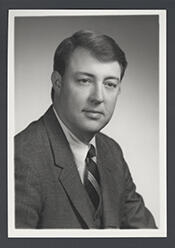
Alfred Marpole Waldron (September 21, 1865 – June 28, 1952) was a Republican politician and businessman who represented Pennsylvania in the United States House of Representatives during the early 1930s. He was born in Philadelphia, Pennsylvania, where he spent virtually his entire life and built a career that combined private enterprise with long service in municipal and party politics.
Details of Waldron’s early life and formal education are not extensively documented in the public record, but he came of age in post–Civil War Philadelphia, a period of rapid industrial and commercial expansion in the city. In this environment he entered the insurance business, a field that was growing in importance as urban populations increased and commercial activity expanded. His work in insurance provided him with experience in finance, risk management, and local business affairs, and it helped establish his standing in the community as he moved into public life.
Waldron’s political career began at the municipal level in Philadelphia, where he became active in Republican Party circles in the early twentieth century. He was elected a member of the Philadelphia Select Council, one of the city’s two legislative chambers under its then–bicameral council system, and served there from 1911 to 1924. During these thirteen years on the Select Council, he participated in the governance of a major American city at a time when urban issues such as public works, transportation, and municipal reform were prominent. His long tenure reflected both his influence within local politics and the strength of the Republican organization that dominated Philadelphia government in that era.
In addition to his municipal service, Waldron held significant roles within the Republican Party apparatus. He was a member of the Republican city committee from 1916 to 1936, a twenty-year period during which he helped shape party strategy and candidate selection in Philadelphia. His prominence in party affairs extended to the national level: he served as a delegate to the Republican National Conventions in 1924, 1928, and 1932. These conventions nominated, respectively, Calvin Coolidge, Herbert Hoover, and Herbert Hoover again for the presidency, and Waldron’s repeated selection as a delegate underscored his status as a trusted party leader in Pennsylvania.
Waldron’s long record in local government and party leadership culminated in his election to the United States House of Representatives. Running as a Republican, he was elected to the 73rd Congress and served a single term from March 4, 1933, to January 3, 1935, representing a Pennsylvania district during the opening phase of the New Deal era. His tenure in Congress coincided with the first two years of President Franklin D. Roosevelt’s administration, a period marked by intense legislative activity in response to the Great Depression. Although detailed accounts of his specific committee assignments and legislative positions are limited, his service placed him among the minority Republicans in a Congress dominated by Democrats, and he participated in the national debates over economic recovery and federal intervention that defined the 73rd Congress.
After serving in the House of Representatives, Waldron chose not to seek renomination in 1934 and returned to private life. He remained associated with Republican politics in Philadelphia through his continuing role on the Republican city committee until 1936, maintaining his influence in local party affairs even after leaving federal office. Beyond his political and business activities, he lived quietly in his native city in his later years, part of a generation of Republican leaders who had shaped Philadelphia’s political landscape in the first decades of the twentieth century.
Alfred Marpole Waldron died in Philadelphia on June 28, 1952. His life and career reflected the trajectory of a local businessman who rose through the ranks of municipal and party politics to serve in the national legislature, while remaining closely tied to the city in which he was born and to the Republican organization that formed the core of his public life.
Congressional Record