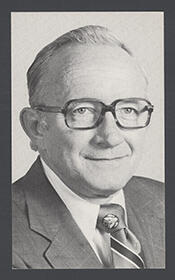
Alfred Rowland (February 9, 1844 – August 2, 1898) was a U.S. Representative from North Carolina and a prominent lawyer and legislator from Robeson County. Born in Lumberton, Robeson County, North Carolina, he grew up in the rural Sandhills region and attended the common schools of the area. His early life was shaped by the agricultural economy and local civic culture of southeastern North Carolina, which would later inform his legal and political career.
With the outbreak of the Civil War, Rowland entered the Confederate States Army in May 1861. He served as a lieutenant in Company D of the Eighteenth Regiment of North Carolina State Troops, a unit that saw extensive action in the Eastern Theater. His service continued until May 12, 1864, when he was captured and subsequently imprisoned at Fort Delaware, a Union prison on the Delaware River. He remained confined there until June 1865, when he was released following the close of hostilities and the formal end of the Confederacy.
After returning to North Carolina, Rowland turned to the study of law as the South entered the Reconstruction era. He read law in the traditional manner of the time and was admitted to the bar in 1867. Establishing his practice in his hometown of Lumberton, he became part of the postwar professional class that helped rebuild local institutions. His legal work in Robeson County brought him increasing prominence and laid the foundation for his entry into public office.
Rowland’s political career began in state government. A Democrat, he was elected to the North Carolina House of Representatives, serving in the sessions of 1876, 1877, 1880, and 1881. During these years he participated in the legislative life of a state undergoing political realignment and the gradual end of Reconstruction. His repeated elections reflected his standing in Robeson County and his role in advancing Democratic policies in the General Assembly, where he contributed to debates over state governance, public finance, and the reorganization of local institutions.
Building on his state-level experience, Rowland was elected as a Democrat to the Fiftieth and Fifty-first Congresses, serving in the U.S. House of Representatives from March 4, 1887, to March 3, 1891. He represented a district in southeastern North Carolina at a time when issues such as tariff policy, internal improvements, and the economic interests of the postwar South were central to congressional debate. While in Congress, he aligned with the Democratic Party’s regional priorities and participated in the legislative work of the House during the administrations of Presidents Grover Cleveland and Benjamin Harrison. He declined to be a candidate for renomination in 1890, thereby concluding his federal legislative service after two terms.
Following his retirement from Congress, Rowland returned to Lumberton and resumed the practice of law. He continued to be a respected figure in Robeson County, where his long career in law and politics made him a leading local citizen. His name was given to the town of Rowland in Robeson County, a recognition of his influence and standing in the region. He remained active in his profession until his health declined in the late 1890s.
Alfred Rowland died in Lumberton, North Carolina, on August 2, 1898. He was interred in Meadow Brook Cemetery in Lumberton. His life spanned the antebellum, Civil War, Reconstruction, and Gilded Age periods, and his career reflected the experiences of many Southern lawyers and politicians who moved from Confederate military service into roles in rebuilding and representing their states in both state and national government.
Congressional Record