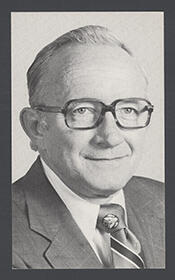
Alfred Dockery (December 11, 1797 – December 3, 1873) was an American Congressional Representative from North Carolina and a prominent Whig politician in the antebellum South. He was born near Rockingham in Richmond County, North Carolina, where he spent his early years. Dockery attended the public schools available in his rural community and, like many of his contemporaries in the region, engaged in planting, establishing himself as a planter of some local standing. He remained closely tied to Rockingham and Richmond County throughout his life, both in his private affairs and public service.
Dockery’s formal political career began at a relatively young age. In 1822 he was elected to the North Carolina House of Commons, marking his entry into state-level politics. During this period he also established a family; he was the father of Oliver Hart Dockery, who was born in 1830 and would later follow him into public life. Dockery’s early legislative experience in the House of Commons helped shape his views on state governance and representation at a time when North Carolina was undergoing significant political and constitutional change.
In 1835 Dockery served as a delegate to the North Carolina constitutional convention, a pivotal gathering that revised the state’s fundamental law. At the convention he took what was then considered a liberal position on race and suffrage, advocating that free Black men should continue to be allowed to vote. This stance placed him in the minority, and the convention ultimately rejected his position, resulting in the disenfranchisement of free Black voters. Following the convention, Dockery continued to build his political career in the state legislature, serving in the North Carolina State Senate from 1836 to 1844. His long tenure in the Senate reflected both his influence within the Whig Party and his standing among constituents in his region.
Dockery’s state-level prominence led to his election to the United States House of Representatives as a member of the Whig Party representing North Carolina. He was first elected to the Twenty-ninth Congress and served from March 4, 1845, to March 3, 1847. His service in Congress occurred during a significant period in American history, as the nation grappled with issues such as territorial expansion and sectional tensions. After completing this first term, Dockery declined to be a candidate for re-election in 1846 to the Thirtieth Congress, returning instead to his private affairs and state interests for a time.
Dockery later reentered national politics and was elected again as a Whig to the Thirty-second Congress, serving from March 4, 1851, to March 3, 1853. Over the course of his two nonconsecutive terms in the House of Representatives, he contributed to the legislative process and participated in the democratic governance of the country, representing the interests of his North Carolina constituents during a period of growing national division. His congressional service placed him among the leading Whig figures in the state and underscored his role in shaping mid-nineteenth-century political debates.
In addition to his congressional service, Dockery sought higher office at the state level. In 1854 he was the unsuccessful Whig candidate for Governor of North Carolina, running at a time when the Whig Party was weakening nationally and facing increasing pressure from emerging political alignments. His defeat in that race reflected both the shifting political landscape and the challenges faced by Southern Whigs in the years leading up to the Civil War.
After the Civil War, Dockery largely retired from active public service and returned to his work as a planter in Richmond County. In the immediate postwar period, he was identified as the National Union (Republican) candidate for governor in 1866, but he did not actively seek the nomination or campaign for the position. In the absence of a vigorous campaign on his part, the conservative incumbent Governor, Jonathan Worth, won the election easily amid low voter turnout. This episode marked Dockery’s final significant association with electoral politics, and he spent his remaining years in relative quiet on his plantation near Rockingham.
Alfred Dockery died in Rockingham, Richmond County, North Carolina, on December 3, 1873. He was interred in the family cemetery there, close to the community in which he had been born and to which he had remained connected throughout his life. His residence, the Alfred Dockery House near Rockingham, was later recognized for its historical significance and was listed on the National Register of Historic Places in 1986, reflecting his enduring association with the political and social history of North Carolina.
Congressional Record