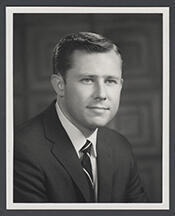
Alfred Avery Burnham (March 8, 1819 – April 11, 1879) was an American politician and lawyer who served as a U.S. Congressman, lieutenant governor of Connecticut, speaker of the Connecticut House of Representatives, and clerk of the Connecticut Senate. He was born in Windham, Connecticut, where he spent much of his life and established his legal career. Raised in a period of growing political and sectional tension in the United States, he came of age in a community that was closely tied to the civic and economic life of eastern Connecticut.
Burnham received his early education in the local schools of Windham, reflecting the typical educational path of New England professionals of his generation. He pursued the study of law, reading in the offices of established attorneys rather than attending a formal law school, as was customary at the time. After completing his legal training, he was admitted to the bar and commenced practice in Windham. His legal work brought him into contact with local business leaders, farmers, and town officials, helping to build the reputation and relationships that would support his later political career.
Burnham’s public life began at the state level, where he quickly became a prominent figure in Connecticut politics. He served as clerk of the Connecticut Senate, a position that placed him at the center of legislative procedure and record-keeping, and gave him detailed familiarity with the workings of state government. He was later elected to the Connecticut House of Representatives, where his colleagues chose him as speaker, entrusting him with the management of debate, the interpretation of rules, and the orderly conduct of the House’s business. His leadership in the state legislature marked him as one of the more capable and respected lawmakers of his time.
Rising further in state government, Burnham was elected lieutenant governor of Connecticut. In that capacity, he served as the second-highest executive officer of the state, presiding over the upper chamber of the legislature and standing in for the governor when required. His tenure as lieutenant governor coincided with a period of political realignment and growing national conflict over slavery and states’ rights, and his responsibilities included helping to guide Connecticut’s legislative agenda and maintain cooperation between the executive and legislative branches.
Burnham’s experience and standing in state politics led to his election to the United States House of Representatives as a member of the Republican Party representing Connecticut. He served two terms in Congress, participating in the legislative process during a significant period in American history. As a Republican, he aligned with a party that had emerged in the 1850s in opposition to the expansion of slavery and in support of a stronger national government and economic development. In the House of Representatives, he represented the interests of his Connecticut constituents while also taking part in the broader national debates that shaped the Union in the years surrounding the Civil War era. His service in Congress reflected both his legal training and his prior legislative experience, and he contributed to the formulation and passage of federal laws during his tenure.
After completing his service in Congress, Burnham returned to Connecticut and resumed his legal practice in Windham. He remained a respected figure in state political and legal circles, drawing on decades of experience in both state and national government. His career illustrated the trajectory of a nineteenth-century New England lawyer-statesman who moved from local practice to state leadership and then to national office, while maintaining close ties to his home community.
Alfred Avery Burnham died on April 11, 1879, in his native Windham, Connecticut. His life spanned a transformative period in American history, from the early industrialization of New England through the sectional crises and political realignments that culminated in the Civil War and its aftermath. Remembered as a diligent lawyer, an experienced legislator, and a Republican officeholder who served two terms in the U.S. Congress, he left a record of service that reflected both his commitment to Connecticut and his engagement with the evolving political life of the United States.
Congressional Record