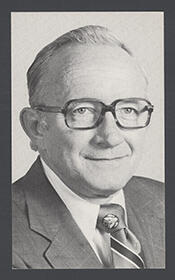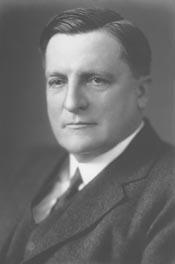
Alfred Lee Bulwinkle (April 21, 1883 – August 31, 1950) was a Democratic U.S. Representative from North Carolina whose service in the United States Congress spanned from 1921 to 1951, encompassing fourteen terms during a significant period in American history. He was born in Charleston, South Carolina, and in 1891 moved with his parents to Dallas, North Carolina, where he was raised. He attended the common schools in his new community, laying the foundation for a career that would combine law, military service, and public office.
Bulwinkle pursued higher education in law at the University of North Carolina at Chapel Hill. After completing his legal studies, he was admitted to the bar in 1904 and commenced the practice of law in Dallas, North Carolina. Establishing himself in the legal profession, he soon became involved in local public service. From 1913 to 1916, he served as prosecuting attorney for the municipal court of Gastonia, North Carolina, gaining experience in the administration of justice and building a reputation that would later support his entry into national politics.
Alongside his legal work, Bulwinkle had an active military career in the North Carolina National Guard. He served as a captain in Company B, First Infantry, North Carolina National Guard from 1909 to 1917. In this capacity he saw duty on the Mexican border in 1916 and 1917, during the period of heightened tensions along the United States–Mexico boundary. With the nation’s entry into the First World War, he entered federal service and rose to the rank of major, commanding the Second Battalion, 113th Field Artillery, 55th Brigade, 30th Division, American Expeditionary Forces. His overseas service during World War I contributed to his standing as a veteran and public figure in North Carolina.
Bulwinkle’s congressional career began when he was elected as a Democrat to the Sixty-seventh Congress and to the three succeeding Congresses, serving from March 4, 1921, to March 3, 1929. As a member of the House of Representatives from North Carolina, he participated in the legislative process and represented the interests of his constituents during a transformative era in American political and economic life. In 1928 he was an unsuccessful candidate for reelection to the Seventy-first Congress, losing his seat to Republican Charles A. Jonas. This temporary setback, however, did not end his public career.
Two years later, Bulwinkle returned to national office by defeating Jonas and winning election to the Seventy-second Congress. He then served in nine succeeding Congresses, remaining in the House of Representatives from March 4, 1931, until his death in 1950. Over these years he was continuously involved in shaping federal policy during the Great Depression, the New Deal, World War II, and the early postwar period. During the Seventy-sixth Congress he served as chairman of the Committee on Memorials, reflecting his seniority and influence within the House. In 1938 he played a key role in the passage of the La Follette–Bulwinkle Act, landmark legislation that sanctioned federal assistance to U.S. states for the establishment of preventive healthcare programs targeting venereal diseases, thereby expanding the federal role in public health.
Bulwinkle’s congressional service also extended into the realm of international civil aviation, an area of growing importance in the mid-twentieth century. In 1944 he served as a delegate to the International Aviation Conference held in Chicago, Illinois, which laid the groundwork for the modern international civil aviation system. In 1947 he further contributed to this field as a United States adviser to the International Civil Aviation Organization, participating in its work at Montreal, Canada, and Geneva, Switzerland. These assignments underscored his engagement with emerging global issues and the expanding international responsibilities of the United States in the postwar era.
Alfred Lee Bulwinkle remained in office until his death, making him one of the members of the United States Congress who died in office in the mid-twentieth century. He died in Gastonia, North Carolina, on August 31, 1950, of multiple myeloma. Following his death, he was interred in Oakwood Cemetery. His long tenure in Congress, encompassing fourteen terms and spanning from 1921 to 1951, reflected sustained support from his constituents and a career marked by service in law, the military, public health legislation, and international civil aviation. Memorial services were held in the House of Representatives, and remarks were presented in eulogy of Alfred Lee Bulwinkle, commemorating his nearly three decades of continuous service in the national legislature.
Congressional Record