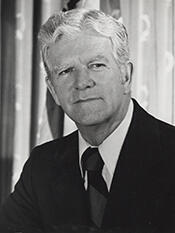
Alexander White was an American lawyer, planter, and politician who served as a member of the United States House of Representatives from Virginia during the early years of the federal government. As a member of the Unknown Party representing Virginia, Alexander White contributed to the legislative process during two terms in office. His service in Congress occurred during a significant period in American history, as the new constitutional system was taking shape, and he participated in the democratic process while representing the interests of his constituents.
White was born in 1738, likely in what was then the Colony of Virginia, during the period of British colonial rule in North America. He came of age in a society dominated by plantation agriculture, English legal traditions, and growing tensions between the colonies and Great Britain. Although detailed records of his early childhood are limited, his later professional life as a lawyer and legislator indicates that he received a substantial education for the time, probably including legal training that prepared him to practice law and to engage in public affairs.
By the latter part of the eighteenth century, White had established himself as a lawyer and landholder in Virginia. His legal practice and involvement in local affairs would have placed him among the educated elite of the state, a group from which many early American officeholders were drawn. As the colonies moved toward independence and then into the uncertain years under the Articles of Confederation, figures such as White were increasingly called upon to help shape the emerging institutions of governance and to address the political and economic challenges facing the new nation.
Alexander White’s congressional service took place after the adoption of the United States Constitution, when Virginia was one of the most populous and politically influential states in the Union. Elected as a U.S. Congressman from Virginia, he served two terms in the House of Representatives, contributing to the legislative process in the formative years of the federal government. During this significant period in American history, the early Congresses dealt with foundational issues such as the establishment of federal financial policy, the organization of the judiciary, and the balance of power between the federal government and the states. White’s role as a representative of Virginia placed him at the center of these debates, and he participated in the work of shaping the laws and institutions of the new republic while advocating for the interests of his constituents.
In addition to his work in Congress, White’s career reflected the broader responsibilities of a Virginia public man of his era, combining legal practice, land management, and public service. His experience as a lawyer informed his understanding of constitutional and statutory questions, and his status as a Virginian landowner connected him to the economic and social concerns of those he represented. Through his legislative service, he contributed to the early development of the United States government at a time when precedents were being set that would influence American political life for generations.
Alexander White died in 1804, closing a life that spanned from the colonial period through the American Revolution and into the first decades of the United States under the Constitution. His career as a U.S. Congressman from Virginia and as a member of the Unknown Party representing Virginia in two terms of congressional service placed him among the early generation of national legislators who helped to translate the principles of the Constitution into functioning institutions and laws. His participation in the democratic process during a formative era of American history ensured that he played a role, however modestly recorded, in the establishment and consolidation of the federal government.
Congressional Record