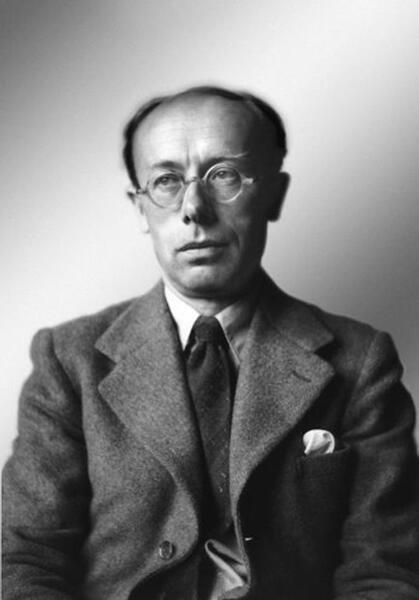
Alexander Newman (October 5, 1804 – September 8, 1849) was an American politician from Virginia who served one term in the United States House of Representatives as a member of the Democratic Party. Born near Orange, Orange County, Virginia, he pursued an academic course in his youth, a common preparatory path for public life in the early nineteenth century. Details of his early family background are sparse, but his upbringing in central Virginia placed him within a region that was then a significant center of the state’s political and agricultural life.
Newman’s personal life was marked by two marriages and a growing family during the years he was establishing himself in public affairs. He married his first wife, Anne Maria Burwell (née Brooke), on February 21, 1826. The couple had three children: Thomas Marshall Newman, William Alexander Newman, and Roberta Newman. After Anne Maria’s death on May 15, 1836, Newman remarried in 1838 to Eloisa Tomlinson. With his second wife he had another son, Lewis Steenrod Newman, born in 1839. These family ties connected Newman to established Virginia and regional families at a time when kinship networks were important to social and political advancement.
Before entering statewide office, Newman held several local offices, gaining experience in public administration and community leadership. Although the specific local positions are not fully documented, this early service helped build his reputation and prepared him for legislative responsibilities. His rise through local roles reflected the typical trajectory of antebellum Virginia politicians, who often moved from county and municipal posts into the state legislature.
Newman’s formal legislative career began in the Virginia House of Delegates, where he served from 1836 to 1838. During this period, Virginia was grappling with questions of internal improvements, representation, and the evolving national party system, and Newman participated in the state’s lawmaking process amid these debates. After his term in the House of Delegates, he advanced to the Virginia Senate, serving there from 1841 to 1846. His years in the Senate coincided with significant political realignments nationally and within Virginia, as Democrats and Whigs contested issues such as banking, tariffs, and westward expansion.
Following his state legislative service, Newman was appointed postmaster of Wheeling, Virginia (now Wheeling, West Virginia), a position he held from 1846 to 1849. At that time, Wheeling was an important commercial and transportation hub along the Ohio River, and the postmastership was a notable federal appointment involving oversight of mail service critical to commerce and communication. His role as postmaster further enhanced his visibility and influence in the region that he would soon represent in Congress.
Newman was elected as a Democrat from Virginia’s 15th congressional district to the United States House of Representatives in 1848. He took his seat in the Thirty-first Congress on March 4, 1849. His service in Congress occurred during a significant period in American history, as the nation confronted the consequences of the Mexican–American War, the status of slavery in newly acquired territories, and sectional tensions that would culminate in the Compromise of 1850. As a Democratic representative from western Virginia, Newman participated in the legislative process and represented the interests of his constituents during this turbulent national debate, contributing to the democratic process in what would be his only term in federal office.
Newman’s congressional career was cut short when he died in office on September 8, 1849, in Pittsburgh, Pennsylvania. He had served in Congress for just over six months at the time of his death, making him one of the members of the United States Congress who died in office during the nineteenth century. He was initially interred in First Street Cemetery. In 1904, his remains were reinterred at Mount Rose Cemetery in Moundsville, Virginia (now Moundsville, West Virginia), reflecting the later reconfiguration of state boundaries and the enduring regional recognition of his public service.
Congressional Record