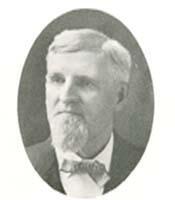
Alexander McDowell (March 4, 1845 – September 30, 1913) was a Republican member of the U.S. House of Representatives from Pennsylvania who served one term in Congress from 1893 to 1895. Over the course of his public life, he participated actively in the legislative process and represented the interests of his constituents during a significant period in American political and economic history.
Born on March 4, 1845, McDowell came of age in the mid-nineteenth century, a time marked by sectional tensions and rapid industrial and social change in the United States. His early years unfolded against the backdrop of the Civil War era, which shaped the political landscape in which he would later build his career. Although detailed records of his childhood and family background are limited, his later prominence in public affairs suggests that he developed an early familiarity with civic life and the issues affecting his community and state.
McDowell’s education prepared him for a career that combined public service and engagement with the broader currents of national policy. Like many men of his generation who entered politics in the late nineteenth century, he would have been influenced by the debates over Reconstruction, industrialization, and the expansion of federal authority. This intellectual and political environment helped form the foundation for his later work as a legislator and party member.
By the time he entered national office, McDowell had aligned himself firmly with the Republican Party, which in Pennsylvania was closely associated with industrial development, protective tariffs, and a strong Unionist legacy. His political career advanced as the United States confronted questions of economic policy, labor relations, and the regulation of commerce. Within this context, McDowell’s affiliation with the Republican Party placed him among those advocating for policies intended to support business growth and national economic expansion, while also responding to the concerns of a diversifying electorate.
McDowell was elected as a Republican to the U.S. House of Representatives from Pennsylvania and served in the Fifty-third Congress from 1893 to 1895. His single term in office coincided with a period of considerable national upheaval, including the Panic of 1893 and the ensuing economic depression, which brought issues of monetary policy, banking regulation, and federal economic intervention to the forefront of congressional debate. As a member of the House of Representatives, Alexander McDowell contributed to the legislative process, participated in the democratic governance of the nation, and represented the interests of his Pennsylvania constituents during this challenging time. His service in Congress occurred when questions of tariff reform, currency standards, and the role of government in addressing economic distress were central to the national agenda.
After leaving Congress in 1895, McDowell remained identified with the Republican Party and the public life of his state. Although he did not return to the House for another term, his experience as a former Representative and party figure would have continued to inform his involvement in civic and political affairs. Like many one-term members of Congress in the late nineteenth century, he carried the perspectives gained in Washington back to his community, where former legislators often played influential roles in local and state politics, business, or public advocacy.
Alexander McDowell died on September 30, 1913. His life spanned from the antebellum period through the Civil War, Reconstruction, and the transformative decades of industrialization and political realignment that defined the Gilded Age and the early Progressive Era. Remembered as a Republican member of the U.S. House of Representatives from Pennsylvania who served from 1893 to 1895, he is part of the broader history of legislators who helped shape federal policy during a pivotal era in American history.
Congressional Record