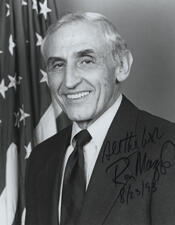
Alexander Keith Marshall (February 11, 1808 – April 28, 1884) was an American physician and politician who became aligned with the Know Nothing Party, sometimes called the American Party, and served a single term as a United States Representative from Kentucky. His career in medicine and politics unfolded during a period of intense sectional tension and nativist sentiment in the United States, and his congressional service reflected the concerns of his Kentucky constituents in the decade before the Civil War.
Details of Marshall’s early life are sparse in the surviving record, but he was born on February 11, 1808, and came of age in the early national period, when Kentucky was transitioning from a frontier society to a more settled agricultural and commercial state. He pursued an education sufficient to qualify him for the study of medicine, a profession that, in the early nineteenth century, typically combined formal instruction with apprenticeship under established physicians. This training prepared him for a career as a practicing physician, a respected role in his community that provided both social standing and a platform for later public service.
Marshall established himself professionally as a physician, practicing medicine at a time when the field was beginning to adopt more systematic methods of training and practice but still relied heavily on individual judgment and experience. His medical work would have brought him into close contact with a broad cross-section of the population, deepening his familiarity with local conditions and concerns. This engagement with community life, combined with the prestige associated with the medical profession, helped lay the groundwork for his entry into political affairs.
By the 1850s, Marshall had become politically aligned with the Know Nothing movement, formally organized as the American Party. This party emerged in response to rising immigration and was characterized by its nativist outlook, skepticism toward the political influence of immigrants and Catholics, and advocacy of longer naturalization periods. As a member of the American Party representing Kentucky, Alexander Keith Marshall contributed to the legislative process during one term in office. His election reflected the resonance of American Party themes among segments of Kentucky’s electorate during a time of rapid demographic and political change.
Marshall’s service in Congress occurred during a significant period in American history, as debates over slavery, states’ rights, and the future of the Union intensified in the years leading up to the Civil War. In the House of Representatives, he participated in the democratic process and represented the interests of his constituents, bringing to national deliberations the perspective of a Kentucky physician and American Party member. Although he served only a single term as United States Representative from Kentucky, his tenure placed him at the center of national policymaking during a volatile era, when questions of national identity, citizenship, and sectional balance were fiercely contested.
After his term in Congress, Marshall returned to private life. Consistent with the pattern of many nineteenth-century citizen-legislators, he resumed his professional and community activities outside the national spotlight. He lived through the Civil War and Reconstruction, witnessing the profound transformation of the political and social order that followed the conflict. Alexander Keith Marshall died on April 28, 1884, closing a life that had spanned from the early republic through the reunified postwar nation, marked by service both as a physician and as a representative of Kentucky in the United States Congress.
Congressional Record