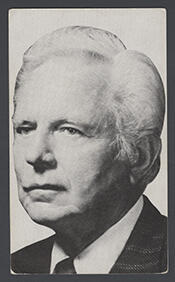
Alexander Long (December 24, 1816 – November 28, 1886) was a Democratic United States Congressman from Ohio who served in the Thirty‑eighth Congress from March 4, 1863, to March 3, 1865. Born near Greenville, in Darke County, Ohio, he grew up in the early frontier environment of western Ohio, an area shaped by rapid settlement and the evolving politics of the Old Northwest. His early life was spent in the agrarian and small‑town communities of the region, experiences that helped form his political outlook and later identification with the Democratic Party’s states’ rights and limited‑government traditions.
Long received a common‑school education in Ohio and, like many young men of his generation, combined his schooling with practical work. He studied law, was admitted to the bar, and began practice in Ohio, establishing himself as an attorney and local political figure. In his early political career, Long aligned with the “free‑soiler” wing of the Democratic Party, which opposed the expansion of slavery into new territories while remaining distinct from the emerging Republican Party. Reflecting this early stance, he voted to repeal the “Black Laws of Ohio,” a set of restrictive statutes that had limited the rights and movement of African Americans in the state. This position placed him among those Democrats who, before the Civil War, favored certain legal reforms while still operating within a party broadly sympathetic to Southern interests.
By the late 1850s and early 1860s, Long had become more prominently engaged in Democratic politics in Ohio. He was elected as a Democrat to the U.S. House of Representatives and took his seat in the Thirty‑eighth Congress at the height of the Civil War. Representing a constituency in a key Union state with significant internal divisions over the war, Long quickly emerged as one of the most outspoken members of the “peace wing” of the Democratic Party. During his term in Congress, he became identified as a leading “Copperhead,” the label applied to Northern Democrats who opposed many of the Lincoln administration’s war policies and advocated for a negotiated peace with the Confederacy.
Long’s congressional service was dominated by his vehement opposition to the continuation of the Civil War and to the administration’s use of federal power to prosecute it. Although he had earlier supported measures such as the repeal of the Black Laws, he later opposed both emancipation and suffrage for Black Americans, rejecting the Republican program of using the war to transform the legal and social status of formerly enslaved people. On April 8, 1864, he delivered a speech in the House of Representatives that became the defining moment of his public career. In that address, Long declared that the conflict had reached a point at which “there are but two alternatives, and these are, either an acknowledgment of the independence of the South as an independent nation, or their complete subjugation and extermination as a people, and of these alternatives I prefer the former.” He argued that he did not believe “there can be any prosecution of the war against a sovereign State under the Constitution,” and maintained that “an unconstitutional war can only be carried on in an unconstitutional manner.” He condemned the idea, associated in his remarks with Representative Thaddeus Stevens of Pennsylvania, of waging the war as a campaign of conquest and subjugation against the Confederate States as an independent nation, stating that he was “equally opposed” to such a policy.
The April 8 speech firmly cemented Long’s opprobrious label as a Copperhead and marked him, in the eyes of supporters and critics alike, as one of the chief leaders of the peace Democrats in Congress. The reaction on the House floor was immediate and intense. Several members denounced his remarks as disloyal, and Speaker of the House Schuyler Colfax led an effort to expel Long from the House for what many Republicans and Unionists regarded as open sympathy with the Confederacy. Colfax was unable to secure the necessary two‑thirds majority for expulsion, but on April 9, 1864, the House of Representatives formally censured Long by a vote of 80 to 69 for “treasonable utterances.” This censure placed him among the small number of members in congressional history to be officially rebuked for their speech on the floor and underscored the deep partisan and sectional tensions of wartime Washington.
Long’s prominence among peace Democrats extended beyond the House chamber. In 1864, some pro‑peace Democrats sought to put him forward as a candidate for president, viewing his uncompromising opposition to the war as a clear alternative to both the Republican administration and more moderate Democrats. He declined the proposed candidacy, however, and refused to support either President Abraham Lincoln, the Republican nominee, or General George B. McClellan, the Democratic nominee, in the 1864 presidential election. His refusal to back a presidential candidate in 1864 mirrored his earlier abstention in the 1860 election, and he continued to withhold his support from all presidential candidates until 1876 on the grounds that they had supported the war. In the same year as his censure, Long sought reelection to the Thirty‑ninth Congress in 1864 but was unsuccessful, his Copperhead reputation and the shifting political climate in Ohio contributing to his defeat.
After leaving Congress in March 1865, Long returned to private life in Ohio. He resumed the practice of law and remained associated with the Democratic Party, though he never again held national office. His postwar years unfolded against the backdrop of Reconstruction and the long political aftermath of the Civil War, during which his earlier opposition to emancipation and Black suffrage placed him at odds with the constitutional amendments and civil rights measures that reshaped the nation. He lived quietly in Ohio in his later years, maintaining his long‑held views on the war and its conduct even as the country moved on to new political and economic issues.
Alexander Long died on November 28, 1886. His career, marked by an early association with free‑soil reforms and a later, intense opposition to the Civil War and to Black emancipation and suffrage, made him one of the most controversial Northern Democrats of his generation. His censure by the House of Representatives and his role as a leading Copperhead left a distinctive imprint on the congressional history of the Civil War era.
Congressional Record