United States Representative Directory

Alexander Duncan

Alexander Duncan served as a representative for Ohio (1837-1845).

  • Democratic
  • Ohio
  • District 1
  • Former
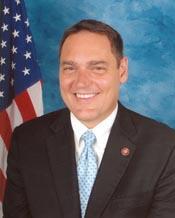
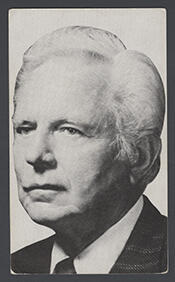
Portrait of Alexander Duncan Ohio
Role Representative

Current assignment referenced in the congressional directory.

State Ohio

Representing constituents across the Ohio delegation.

District District 1

District insights and legislative focus areas.

Service period 1837-1845

Years of public service formally recorded.

Font size

Biography

Alexander Duncan was the name of several notable individuals who were active in military, political, religious, athletic, medical, and law-enforcement fields from the seventeenth through the twentieth centuries. Their careers spanned Scotland, England, the United States, British India, Afghanistan, and Australia, and together they contributed to public life, sport, and service in a variety of national and imperial contexts.

The earliest prominent figure bearing the name was Alexander Duncan (1655–1733), a Scottish Episcopal clergyman and bishop. Born in the mid-seventeenth century in Scotland, he came of age during a period of intense religious and political upheaval marked by the Restoration, the Glorious Revolution, and the subsequent reconfiguration of church-state relations. Within this environment, Duncan entered the ministry of the Scottish Episcopal Church, which maintained episcopal governance and liturgical traditions distinct from the established Presbyterian Church of Scotland. Over the course of his long clerical career, he rose to the episcopate, serving as a bishop and playing a role in sustaining the Episcopal tradition in Scotland during an era when it often faced legal and political disabilities. His life extended into the early eighteenth century, allowing him to witness the 1707 Acts of Union and the continuing evolution of religious life in the new Kingdom of Great Britain.

Another significant bearer of the name was Alexander Duncan (1780–1859), an army officer in the service of the East India Company. Born in 1780, he entered military service at a time when the Company was consolidating and expanding British influence on the Indian subcontinent. As an East India Company officer, Duncan would have been part of the complex military and administrative apparatus that underpinned British rule in India, participating in campaigns and garrison duties that supported the Company’s commercial and territorial interests. His career unfolded against the backdrop of major conflicts and political realignments in South Asia, and he lived long enough to see the growing tensions that would culminate in the Indian Rebellion of 1857, although he died in 1859, shortly after that upheaval.

In the United States, Alexander Duncan (1788–1853) emerged as a notable political figure and U.S. Representative from Ohio. Born in 1788, in the early years of the American republic, he eventually settled in Ohio, a rapidly developing state on the nation’s western frontier. Duncan entered public life as a member of the Democratic Party during the Jacksonian era, when debates over banking, internal improvements, and federal power dominated national politics. He served in the Ohio state legislature before being elected to the United States House of Representatives. As a U.S. Representative from Ohio, he participated in the legislative affairs of the Twenty-fifth and subsequent Congresses in the 1830s and 1840s, a period marked by the Panic of 1837, disputes over the national bank, and sectional tensions that foreshadowed the Civil War. He remained active in public service until his death in 1853.

The name Alexander Duncan was also borne by several prominent sportsmen in the late nineteenth and early twentieth centuries. Alexander William Duncan (1881–1934) was a Scottish cricketer and rugby player who came to prominence in the era when organized team sports were becoming central to British and imperial culture. Born in Scotland in 1881, he developed his athletic talents in both cricket and rugby union, representing clubs and possibly regional sides in these codes. His dual participation in two of the most important British sports of the time reflected the amateur sporting ethos of the late Victorian and Edwardian periods, in which versatility and broad participation were highly valued. He remained associated with Scottish sport until his death in 1934.

Another athlete, Alexander Duncan (1884–1959), was a British Olympic runner. Born in 1884, he competed at a time when international athletics and the modern Olympic Games were still in their formative decades. As a British Olympic runner, Duncan represented his country in track and field events, contributing to the early history of Olympic competition for Great Britain. His career would have involved participation in national and possibly international meets, and his Olympic involvement placed him among the elite middle- or long-distance runners of his generation. He lived until 1959, witnessing the transformation of athletics from a largely amateur pursuit into an increasingly global and professionalized field.

Football and Australian rules football also featured Alexander Duncans among their notable players. Alexander Duncan (footballer) (born 1891) was a Scottish footballer active in the early twentieth century, a period when association football was firmly established as a major spectator sport in Scotland and across the United Kingdom. Although detailed records of his clubs and positions are limited, his recognition as a Scottish footballer indicates participation in the organized league system that underpinned the professional game. In Australia, Alex Duncan (1900–1984) became known as an Australian rules footballer. Born in 1900, he played in the Australian code that had developed its own distinct rules and culture separate from rugby and soccer. His career unfolded in the interwar years, when Australian rules football was consolidating its status as a central element of sporting life in Victoria and other Australian states. Duncan’s playing years and subsequent life until 1984 placed him within the long evolution of the sport from regional pastime to nationally celebrated competition.

Public service and law enforcement were represented by Alexander Duncan (1888–1965), a Scottish police officer who became Chief Commissioner of Victoria Police in Australia. Born in Scotland in 1888, he began his career in policing before emigrating to Australia, where he joined the Victoria Police. Rising through the ranks, he was appointed Chief Commissioner of Victoria Police, serving from 1937 to 1954. His tenure encompassed the late interwar period, the entirety of the Second World War, and the early postwar years, a time when police forces faced challenges ranging from wartime security and civil defense to postwar social change and urban growth. As Chief Commissioner, Duncan was responsible for the overall leadership, administration, and modernization of the force in the state of Victoria. He retired from the position in 1954 and died in 1965, leaving a legacy in Australian policing.

The name also appears in the medical field through Alexander Duncan, a British doctor who spent six years in a village high up in the Wakhan Corridor of north-eastern Afghanistan. Although specific biographical details such as his birth and death dates are not widely recorded, his work in the Wakhan Corridor placed him in one of the most remote and mountainous regions of Central Asia, bordering present-day Tajikistan, Pakistan, and China. During his six-year residence, he provided medical care to local communities with limited access to modern health services, practicing in challenging environmental and logistical conditions. His service exemplified the tradition of British medical practitioners working in remote international settings, combining clinical work with elements of humanitarian and developmental assistance.

Congressional Record

Loading recent votes…

More Representatives from Ohio