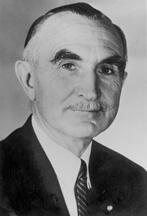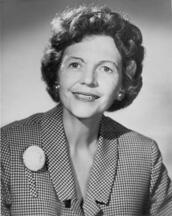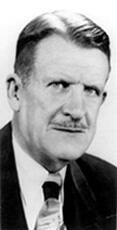
Alexander Grant Barry (August 23, 1892 – December 28, 1952) was an American attorney and Republican politician from Oregon who served briefly as a United States Senator from Oregon from late 1938 to early 1939 and later as a member of the Oregon House of Representatives. A native of Astoria and a World War I veteran, he contributed to the legislative process during one term in the United States Congress and remained active in public service at the state and local levels throughout much of his career.
Barry was born on August 23, 1892, in Astoria, Oregon, at the mouth of the Columbia River. He received his early education in the public schools of Astoria and later in Portland, reflecting his family’s relocation within the state. After completing his primary and secondary schooling, he attended the University of Washington in Seattle, from which he graduated. Seeking a legal career, he enrolled at the University of Oregon Law School, which at that time was located in Portland. When the University of Oregon moved its law school to Eugene in 1915, Barry continued his legal studies at the newly created Northwest College of Law in Portland.
Barry completed his legal education and was admitted to the Oregon bar in 1917, entering private legal practice in Portland. With the United States’ entry into World War I, he joined the United States Army in 1918 and was commissioned a second lieutenant in the artillery. He served with the American Expeditionary Forces in France, remaining in military service until February 1919. Following his return from the war, he resumed his legal practice in Portland. During this period of his early professional life, he married and had two children with his first wife, establishing his family while building his legal and civic career.
During the 1930s, Barry became increasingly involved in public service and state-level governance. In 1932, he was appointed to the Oregon Relief Committee, serving through 1933 during the early years of the Great Depression, when relief and recovery efforts were central concerns of state and federal policy. He then served on the Oregon Liquor Control Commission from 1933 to 1935, participating in the regulation of alcoholic beverages in the wake of the repeal of Prohibition. By 1937 and 1938, he had become chairman of the Civil Service Board of Portland School District No. 1, overseeing personnel and civil service matters for the city’s public schools. These roles helped establish his reputation as a capable administrator and Republican public servant.
Barry’s service in the United States Senate came during a significant period in American history, as the nation grappled with the continuing effects of the Great Depression and the evolving policies of the New Deal. In January 1938, Oregon Senator Frederick Steiwer resigned from the United States Senate and was temporarily replaced by Alfred E. Reames, who was appointed by the Governor of Oregon. In the special election held on November 8, 1938, Alexander Grant Barry, running as a Republican, was elected to fill the remaining portion of Steiwer’s unexpired term. He took his seat and served in Congress from November 9, 1938, until January 3, 1939. During this brief tenure in the Senate, he participated in the democratic process and represented the interests of his Oregon constituents, contributing to the legislative work of the 75th Congress. Barry chose not to be a candidate for election to the full Senate term, which was subsequently won by Rufus C. Holman.
After leaving the United States Senate in January 1939, Barry returned to Portland and resumed the practice of law. He remained engaged in civic and political affairs, and in 1940 he married his second wife, Helen M. Bealey. His political career continued at the state level when, in 1944, he was elected to the Oregon House of Representatives as a Republican representing Portland and Multnomah County. Serving as the representative from District 5, he sat in the Oregon House during the 1945, 1947, and 1949 legislative sessions, where he participated in shaping state legislation in the immediate post–World War II era.
Alexander Grant Barry died on December 28, 1952, in Portland, Oregon. In recognition of his military service and public career, he was interred at Willamette National Cemetery near Portland. His life encompassed service as a World War I officer, practicing attorney, United States Senator from Oregon from 1937 to 1939 as recorded in congressional records, and state legislator, reflecting a sustained commitment to public service at both the federal and state levels.
Congressional Record