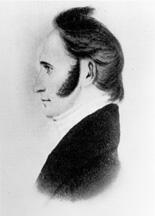
Alexander Outlaw Anderson (November 10, 1794 – May 23, 1869) was an American slave owner, attorney, and public official who represented Tennessee in the United States Senate and later served in the California State Senate and on the California Supreme Court. A member of the Democratic Party, he held office during a formative period in the political development of both Tennessee and California, participating in the legislative and judicial processes as the United States expanded westward.
Anderson was born on November 10, 1794, in Tennessee, into a prominent frontier family closely connected with the early political life of the state. He was the son of Joseph Anderson, who served as a United States Senator from Tennessee, and the grandson of Alexander Outlaw, a well-known early Tennessee legislator and landholder. Raised in an environment steeped in law, politics, and public affairs, he was exposed from an early age to the workings of government and the legal profession on the American frontier.
Educated in the classical tradition available to young men of his social standing in the early republic, Anderson studied law and prepared for a professional career at the bar. After reading law in the customary manner of the period, he was admitted to practice and established himself as an attorney in Tennessee. As a lawyer and slave owner, he participated in the legal and economic structures of the antebellum South, building a reputation that would support his later entry into elective office.
Anderson’s national political career began when he was elected as a Democrat to the United States Senate from Tennessee. He served as a Senator from Tennessee in the United States Congress from 1839 to 1841, completing one term in office. His service in Congress occurred during a significant period in American history, marked by debates over territorial expansion, economic policy, and the evolving balance of power between free and slave states. As a member of the Senate, Alexander Outlaw Anderson contributed to the legislative process, participated in the democratic governance of the nation, and represented the interests of his Tennessee constituents within the broader framework of Democratic Party politics.
Following his tenure in the United States Senate, Anderson continued his legal and political career as the nation’s attention turned increasingly to the Pacific Coast. After the American acquisition of California and the onset of the Gold Rush, he moved west and became involved in the organization of California’s state institutions. In this new setting, he was elected to the California State Senate, where he took part in shaping the laws and policies of the nascent state during its early years of statehood.
Anderson’s experience as an attorney and legislator led to his service on the California Supreme Court, where he joined a bench that, at various times in the mid-nineteenth century, included notable jurists such as Hugh Murray and Solomon Heydenfeldt. On the state’s highest court, he participated in decisions that helped define California’s legal framework in areas ranging from property and mining rights to civil procedure, at a time when the state was rapidly transforming under the pressures of migration, commerce, and economic development.
In his later years, Anderson remained identified with the legal and political worlds that had shaped his life, spanning from the early republic in Tennessee to the tumultuous growth of California. He died on May 23, 1869, closing a career that had bridged the older slaveholding South and the emerging Pacific West. His life reflected the broader currents of nineteenth-century American expansion, law, and politics, as he moved from representing Tennessee in the United States Senate to helping establish legislative and judicial institutions in California.
Congressional Record