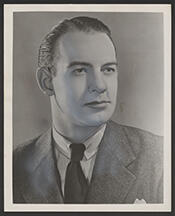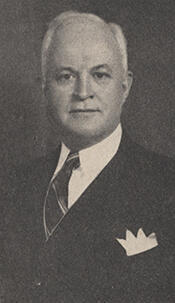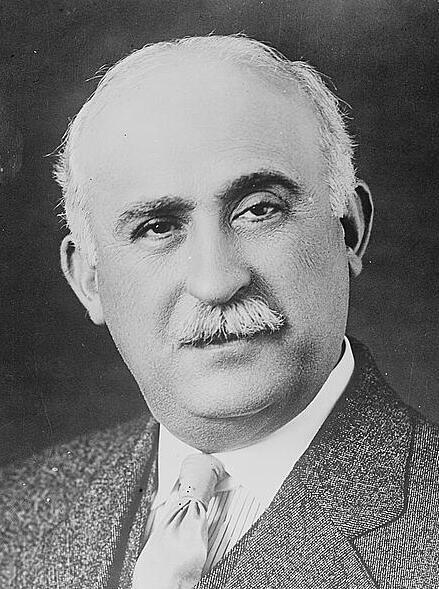
Albert Fawcett Polk (October 11, 1869 – February 14, 1955) was an American lawyer and politician from Georgetown, in Sussex County, Delaware, and later Wilmington, Delaware. A member of the Democratic Party, he served as a U.S. Representative from Delaware in the United States Congress from 1917 to 1919, contributing to the legislative process during one term in office and representing the interests of his constituents during a significant period in American history.
Polk was born in Frederica, Kent County, Delaware, on October 11, 1869. He was educated in Delaware and attended Delaware College, now the University of Delaware, in Newark. He completed his undergraduate studies there and graduated in 1889. After college, he pursued legal studies, preparing for a career in the law that would form the foundation of his later political and public service activities.
Following his legal training, Polk was admitted to the Delaware Bar in 1892. He established a law practice in Georgetown, Sussex County, where he quickly became active in local civic and political affairs. His professional reputation as an attorney grew alongside his involvement in the Democratic Party, and he emerged as a significant figure in Sussex County’s legal and political communities at the turn of the twentieth century.
Polk’s early public service included work within the Delaware General Assembly and the Democratic Party organization. In 1899 he became an attorney for the Delaware State Senate, providing legal counsel to the upper chamber of the state legislature. In 1902 he was chosen as chairman of the Sussex County Democratic Committee, a position he held until 1908 and then again from 1915 to 1916. At the same time, he served as a member of the Democratic State Committee, helping to shape party strategy and candidate selection at the state level. Beyond partisan politics, Polk was active in local education; he became a member of the Georgetown Board of Education in 1905 and served there until 1912. From 1914 until 1921 he was a member and secretary of the Board of Law Examiners of Sussex County, participating in the oversight of admission to the legal profession in that jurisdiction.
Polk was elected to the U.S. House of Representatives in the general election held on the first Tuesday after November 1, 1916, defeating incumbent Republican U.S. Representative Thomas W. Miller. He took office on March 4, 1917, in accordance with the constitutional schedule then in effect, and served until March 3, 1919, representing Delaware’s at-large congressional district during the administration of President Woodrow Wilson. During this period, he served with the Democratic majority in the 65th Congress, a body that confronted major issues arising from the United States’ entry into World War I and the associated domestic and international challenges. As a member of the House of Representatives, Polk participated in the democratic process and contributed to the legislative work of Congress on behalf of Delaware. Seeking reelection in 1918, he was defeated by Republican Caleb R. Layton, a physician from Georgetown, and his congressional service concluded at the end of his first term. At that time, U.S. Representatives served two-year terms beginning on March 4 following their election.
After leaving Congress, Polk resumed the practice of law. In 1921 he moved his practice from Georgetown to Wilmington, Delaware, reflecting both the growth of his legal career and the increasing importance of Wilmington as the state’s principal urban and commercial center. He continued to be regarded as a respected member of the Delaware Bar. In 1929 he was appointed United States Commissioner for the District of Delaware, a federal judicial officer position roughly analogous to that of a modern U.S. magistrate judge, with responsibilities that included handling preliminary federal judicial proceedings. Polk held this post for more than two decades, serving from 1929 until his retirement in 1951.
Albert Fawcett Polk died in Wilmington, Delaware, on February 14, 1955. He was interred in Union Cemetery on South Race Street in Georgetown, Sussex County, thereby returning in death to the community where he had begun his legal and political career.
Congressional Record