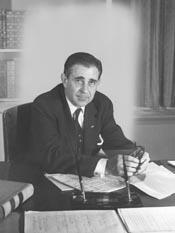
Albert Richards Howe (January 1, 1840 – June 1, 1884) was an American businessman, Civil War veteran, and Republican politician who represented Mississippi in both the state legislature and the United States House of Representatives during the Reconstruction era. His public career unfolded at a time of intense political and social transformation in the post–Civil War South, and he participated in the democratic process as a representative of Mississippi’s interests at both the state and national levels.
Born on January 1, 1840, Howe came of age in the antebellum United States and entered adulthood as the nation moved toward civil conflict. Details of his early life and family background are sparse in the surviving record, but his later activities as a businessman and officeholder suggest that he acquired a practical education suited to commerce and public affairs. Like many men of his generation, his formative years were shaped by the sectional tensions that culminated in the Civil War.
During the Civil War, Howe served in the Union forces, gaining the experience and perspective of a Civil War veteran. His military service placed him among those who directly participated in the preservation of the Union and the defeat of the Confederacy, and it provided him with credentials that later carried weight in the politics of Reconstruction. After the war, he turned to business pursuits, establishing himself as an American businessman at a time when the Southern economy was undergoing profound restructuring.
Howe’s postwar career led him to Mississippi, where he became involved in public life during Reconstruction. Aligning with the Republican Party, which then championed Unionist and Reconstruction policies in the South, he entered state politics and was elected to the Mississippi House of Representatives. He served one term in that body from 1873 to 1875, participating in efforts to redefine state government, expand civil rights, and rebuild public institutions in the aftermath of the war. His legislative work at the state level provided him with experience in lawmaking and constituent service in a politically volatile environment.
Building on his state legislative service, Howe advanced to national office as a Republican representative from Mississippi in the United States House of Representatives. His term in Congress occurred during a significant period in American history, as federal lawmakers grappled with the final phases of Reconstruction, the readjustment of relations between the federal government and the former Confederate states, and the protection of the rights of newly freed African Americans. In this context, Howe contributed to the legislative process, representing the interests of his Mississippi constituents and participating in debates over the direction of national policy in the postwar era.
After his period of congressional service, Howe returned to private life and his business interests. Like many Reconstruction-era Republicans in the South, his political career was relatively brief, constrained by the shifting balance of power as “Redeemer” Democrats reasserted control in Mississippi and other Southern states. Nonetheless, his combined record as a Civil War veteran, businessman, state legislator, and member of Congress reflects the opportunities and challenges faced by Unionist and Republican officeholders in the Reconstruction South.
Albert Richards Howe died on June 1, 1884. His life and career, though not extensively documented in surviving sources, illustrate the trajectory of a Northern-aligned veteran and Republican who sought to shape the political and economic future of Mississippi during one of the most turbulent and consequential periods in American history.
Congressional Record